Repetitive transcranial magnetic stimulation in premenstrual dysphoric disorder
Keywords:
Premenstrual Dysphoric Disorder, Repetitive Transcranial Magnetic Stimulation, Randomized Controlled TrialAbstract
https://repositorio.ufpe.br/handle/123456789/64635
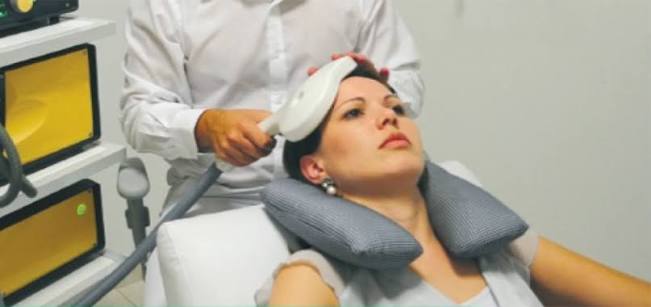
Introduction: Premenstrual dysphoric disorder (PMDD) affects 1.6% of women, but current treatments have limited effectiveness due to side effects, poor adherence, or inaccessibility. This study evaluated the efficacy, acceptability, and tolerability of highfrequency repetitive transcranial magnetic stimulation (rTMS) in PMDD. Methods: A double-blind, controlled clinical trial was conducted with 40 women, randomized to receive either active rTMS (n = 21) or sham stimulation (n = 19). Five sessions of 10 Hz rTMS were applied over the left dorsolateral prefrontal cortex during the late luteal phase, over two consecutive menstrual cycles. Outcome measures included the Premenstrual Symptom Screening Tool (PSST), Daily Record of Severity of Problems (DRSP), Hamilton Depression Rating Scale (HAM-D), Hamilton Anxiety Rating Scale (HAM-A), and the Subjective Well-Being Scale (EBES). Results: The mean age was 35.6 (± 5.4) years in the active rTMS group and 33.8 (± 6.1) years in the sham group. Response rates did not differ significantly between groups (p = 0.56). A significant reduction in anxiety symptoms was observed only in the active group during the first menstrual cycle (mean difference: –2.1 on HAM-A; p = 0.027), but not in the second cycle (p = 0.13). No significant changes were observed in depressive symptoms (p > 0.05). Positive affects increased in both groups across cycles, with no significant differences (p = 0.89). The intervention was well tolerated, with dropout rat es of 19% (active) and 26% (sham). Conclusion: rTMS appears to be safe and potentially effective in reducing anxiety symptoms in PMDD, particularly during the first treatment cycle. Further studies are needed to confirm its efficacy and optimize stimulation parameters.
Downloads
Published
How to Cite
License
Copyright (c) 2026 Dennison Carreiro Monteiro

This work is licensed under a Creative Commons Attribution-NonCommercial 4.0 International License.