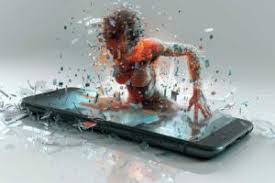
The brevity of the individual as form: minority, algorithm, geopolitics, and the new collective
DOI:
https://doi.org/10.25118/2763-9037.2026.v16.1595Keywords:
geopolitics, digital platforms, social media, child, adolescent, teenager, TikTok, mental healthDownloads
Metrics
References
1. Dias ÁM. Intelectuais em declínio. Folha de S. Paulo [Internet]. 2026 Jan 25 [citado 2026 Mar 28]. Disponível em: https://www1.folha.uol.com.br/colunas/alvaro-machado-dias/2026/01/intelectuais-em-declinio.shtml
2. Marginson S. Global science and national comparisons: beyond bibliometrics and scientometrics. Compar Educ. 2022;58(2):125-46. https://doi.org/10.1080/03050068.2021.1981725
3. Moscovitz H, Sabzalieva E. Conceptualising the new geopolitics of higher education. Glob Soc Educ. 2023;21(2):149-65. https://doi.org/10.1080/14767724.2023.2166465
4. Srivastava S. Algorithmic governance and the international politics of Big Tech. Perspect Polit. 2023;21(3):989-1000. https://doi.org/10.1017/S1537592721003145
5. Goswami D, Hazarika G. The industrial revolution in Western Europe: a catalyst for modern society. Voice Creative Research. 2025;7(3):219-30. https://doi.org/10.53032/tvcr/2025.v7n3.24
6. Liang F, Li GM. Geopolitics in platform governance: algorithmic sovereignty and data localization in China and the United States. Policy Internet. 2025;17(3):e70014. https://doi.org/10.1002/poi3.70014
7. Dirlik A. The postcolonial aura: third world criticism in the age of global capitalism. Crit Inq. 1994;20(2):328-56. https://jan.ucc.nau.edu/sj6/dirlikpocoaura.pdf
8. Watson JB. A psicologia como o behaviorista a vê. Temas Psicol. 2008;16(2):289-301. http://pepsic.bvsalud.org/scielo.php?script=sci_arttext&pid=S1413-389X2008000200011
9. Mei MQ, Genet C. Social media entrepreneurship: a study on follower response to social media monetization. Eur Manag J. 2024;42(1):23-32. https://doi.org/10.1016/j.emj.2022.04.006
10. Jain A, Hussenet A. Profitability and polarization: TikTok's dominance of the attention economy. J. Student Research. 2022;11(3):1-11. https://doi.org/10.47611/jsrhs.v11i3.2963
11. Melgarejo-Espinoza R, Gonzales-Cruz M, Chavez-Perez J, Iparraguirre-Villanueva O. Impact of the TikTok algorithm on the effectiveness of marketing strategies: a study of consumer behavior and content preferences. Int J Adv Comput Sci Appl. 2025;16(2):147-56. https://doi.org/10.14569/IJACSA.2025.0160215
12. Li C. The impact of short-video platforms on teenagers' impulsive consumption decisions from the perspective of behavioral economics. AEMPS. 2025;214:91-101. https://doi.org/10.54254/2754-1169/2025.CAU26833
13. Liu H, Li H, Wang Q, Lan Z, Gou W. Short video addiction and subjective well-being in adolescents: a chained mediation model of emotional deterioration and loss of life meaning. Comput Hum Behav Rep. 2025;20:100852. https://doi.org/10.1016/j.chbr.2025.100852
14. Fatimah AF, Nasir M. Utilization of short-form videos (TikTok, Reels, Shorts) to increase brand engagement and visibility. JSEO. 2025;2(1):16-32. https://doi.org/10.59261/jseo.v2i1.7
15. McCashin D, Murphy CM. Using TikTok for public and youth mental health: a systematic review and content analysis. Clin Child Psychol Psychiatry. 2023;28(1):279-306. https://doi.org/10.1177/13591045221106608 PMid:35689365 PMCid:PMC9902978
16. Nguyen L, Walters J, Paul S, Monreal Ijurco S, Rainey GE, Parekh N, Blair G, Darrah M. Feeds, feelings, and focus: a systematic review and meta-analysis examining the cognitive and mental health correlates of short-form video use. Psychol Bull. 2025;151(9):1125-46. https://doi.org/10.1037/bul0000498 PMid:41231585
17. Conte G, Iorio GD, Esposito D, Romano S, Panvino F, Maggi S, Altomonte B, Casini MP, Ferrara M, Terrinoni A. Scrolling through adolescence: a systematic review of the impact of TikTok on adolescent mental health. Eur Child Adolesc Psychiatry. 2025;34(5):1511-27. https://doi.org/10.1007/s00787-024-02581-w PMid:39412670 PMCid:PMC12122552
18. Gao X. The impact of Douyin (Chinese TikTok) on the socialization of Chinese youth. SHS Web Conf. 2023;155:01013. https://doi.org/10.1051/shsconf/202315501013
19. Versão chinesa do TikTok limita menores de 14 anos a 40 minutos por dia no app. G1 [Internet]. 2021 Sep 20 [citado 2026 Mar 28]. Disponível em: https://g1.globo.com/tecnologia/noticia/2021/09/20/versao-chinesa-do-tiktok-limita-menores-de-14-anos-a-40-minutos-por-dia-no-app.ghtml
20. Champion KE, Birrell L, Smout S, Teesson M, Slade T. Debate: social media in children and young people - time for a ban? Beyond the ban - empowering parents and schools to keep adolescents safe on social media. Child Adolesc Ment Health. 2025;30(3):411-13. https://doi.org/10.1111/camh.70032 PMid:40931432 PMCid:PMC12573062
21. Nogrady B. Australia's social media ban comes into effect despite concerns. BMJ. 2025;391:r2651. https://doi.org/10.1136/bmj.r2651 PMid:41407449
22. From Australia to Europe, countries move to curb children's ocial media access. Reuters [Internet].
2026 Jan 27 [citado 2026 Mar 28]. Disponível em: https://www.reuters.com/world/asia-pacific/australia-europe-countries-move-curb-childrens-social-media-access-2026-03-27/
23. Ye JH, Wu YT, Wu YF, Chen MY, Ye JN. Effects of short video addiction on the motivation and well-being of Chinese vocational college students. Front Public Health. 2022;10:847672. https://doi.org/10.3389/fpubh.2022.847672 PMid:35619803 PMCid:PMC9127725
24. Zhang L, Wang J, Zhao X. Personalized recommendation and short-form video addiction tendency: the mediating effect of flow and the moderating effect of self-control. BMC Psychol. 2026;14(1):554. https://doi.org/10.1186/s40359-026-04336-5 PMid:41814453 PMCid:PMC13088501
25. Liao M. Analysis of the causes, psychological mechanisms, and coping strategies of short video addiction in China. Front Psychol. 2024;15:1391204. https://doi.org/10.3389/fpsyg.2024.1391204 PMid:39165759 PMCid:PMC11333346
26. Costello N, Sutton R, Jones M, Almassian M, Raffoul A, Ojumu O, Salvia M, Santoso M, Kavanaugh JR, Austin SB. Algorithms, addiction, and adolescent mental health: an interdisciplinary study to inform state-level policy action to protect youth from the dangers of social media. Am J Law Med. 2023;49(2-3):135-72. https://doi.org/10.1017/amj.2023.25 PMid:38344782 PMCid:PMC11229793
27. American Psychiatric Association. Diagnostic and statistical manual of mental disorders: DSM-5-TR. 5th ed. Washington (DC): American Psychiatric Publishing; 2022. https://doi.org/10.1176/appi.books.9780890425787
28. Marciano L, Ostroumova M, Schulz PJ, Camerini A‑L. Digital Media Use and Adolescents' Mental Health During the Covid‑19 Pandemic: A Systematic Review and Meta‑Analysis. Front Public Health. 2022;9:793868. https://doi.org/10.3389/fpubh.2021.793868 PMid:35186872 PMCid:PMC8848548
29. Davis C. Evolutionary and neuropsychological perspectives on addictive behaviors and addictive substances: relevance to the "food addiction" construct. Subst Abuse Rehabil. 2014;5:129-37. https://doi.org/10.2147/SAR.S56835 PMid:25540603 PMCid:PMC4270301
30. Volkow ND, Wise RA, Baler R. The dopamine motive system: implications for drug and food addiction. Nat Rev Neurosci. 2017;18(12):741-52. https://doi.org/10.1038/nrn.2017.130 PMid:29142296
31. Lieberman MD. Social and affective neuroscience: ensuring our future. Soc Cogn Affect Neurosci. 2024;19(1):nsae035. https://doi.org/10.1093/scan/nsae035 PMid:38809715 PMCid:PMC11215486
32. Áfra E, Janszky J, Perlaki G, Orsi G, Nagy SA, Arató Á, Szente A, Alhour HAM, Kis-Jakab G, Darnai G. Altered functional brain networks in problematic smartphone and social media use: resting-state fMRI study. Brain Imaging Behav. 2024;18(2):292-301. https://doi.org/10.1007/s11682-023-00825-y PMid:38049599 PMCid:PMC11156717
33. Hilbert M, Cingel DP, Zhang J, Vigil SL, Shawcroft J, Xue H, Thakur A, Shafiq Z. #BigTech @Minors: social media algorithms have actionable knowledge about child users and at-risk teens. Telemat Inform. 2025;103:102341. https://doi.org/10.1016/j.tele.2025.102341
34. Teixeira PS. YouTube limita acesso de menores aos vídeos curtos. Diário do Comércio [Internet]. 2026 Jan 24 [citado 2026 Mar 28]. Disponível em: https://diariodocomercio.com.br/negocios/youtube-limita-acesso-menores-videos-curtos
35. Hinten AE, Scarf D, Imuta K. Meta-analytic review of the short-term effects of media exposure on children's attention and executive functions. Dev Sci. 2025;28(6):e70069. https://doi.org/10.1111/desc.70069 PMid:40910427 PMCid:PMC12412071
36. Dunker CIL. Descartes e o método psicanalítico. Rev Estud Lacanianos. 2008;1(1):169-86. http://pepsic.bvsalud.org/pdf/rel/v1n1/v1n1a15.pdf
37. Dunker C. O sujeito da psicanálise para o mundo. Rev Humanos. Dossiê 1198. https://revistahumanos.com.br/dossie/1198/
38. Moraes MCB. Danos à pessoa humana: uma leitura civil-constitucional dos danos morais. Rio de Janeiro: Processo; 2024.
39. Yan T, Su C, Xue W, Hu Y, Zhou H. Mobile phone short video use negatively impacts attention functions: an EEG study. Front Hum Neurosci. 2024;18:1383913. https://doi.org/10.3389/fnhum.2024.1383913 PMid:38993329 PMCid:PMC11236742
40. Dong Z, Zhang S. An analysis of the bidirectional shaping mechanism between short‑video algorithms and film narrative driven by the attention economy. Proc Bus Econ Stud. 2025;8(5):12109. https://doi.org/10.26689/pbes.v8i5.12109
Published
How to Cite
Issue
Section
License
Copyright (c) 2026 Heitor Pedrosa Haddad, Paulo Marcos Brasil Rocha

This work is licensed under a Creative Commons Attribution-NonCommercial 4.0 International License.
Debates em Psiquiatria allows the author (s) to keep their copyrights unrestricted. Allows the author (s) to retain their publication rights without restriction. Authors should ensure that the article is an original work without fabrication, fraud or plagiarism; does not infringe any copyright or right of ownership of any third party. Authors should also ensure that each one complies with the authorship requirements as recommended by the ICMJE and understand that if the article or part of it is flawed or fraudulent, each author shares responsibility.
Attribution-NonCommercial 4.0 International (CC BY-NC 4.0) - Debates em Psiquiatria is governed by the licencse CC-By-NC
You are free to:
- Share — copy and redistribute the material in any medium or format
- Adapt — remix, transform, and build upon the material
The licensor cannot revoke these freedoms as long as you follow the license terms. Under the following terms:
- Attribution — You must give appropriate credit, provide a link to the license, and indicate if changes were made. You may do so in any reasonable manner, but not in any way that suggests the licensor endorses you or your use.
- NonCommercial — You may not use the material for commercial purposes.
No additional restrictions — You may not apply legal terms or technological measures that legally restrict others from doing anything the license permits.