
Sociodemographic and healthcare profile of patients undergoing electroconvulsive therapy at a referral hospital in southern Brazil
DOI:
https://doi.org/10.25118/2763-9037.2026.v16.1614Keywords:
electroconvulsive therapy, mental disorders, Brazil, ECTAbstract
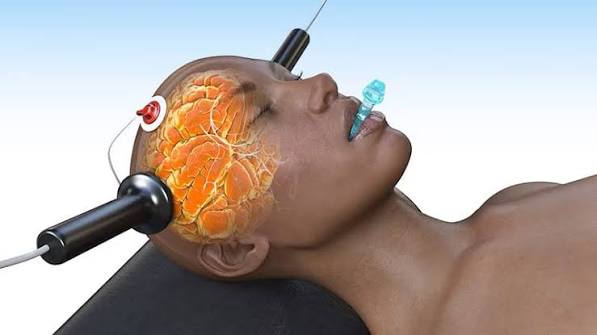
Introduction: The management of severe and treatment-resistant mental disorders remains a major challenge in psychiatric practice, particularly in the context of limited response to conventional treatments. In this setting, electroconvulsive therapy (ECT) represents an important therapeutic modality, primarily indicated for treatment-resistant depression, severe psychotic disorders, catatonia, and emergency situations such as high suicide risk. Objective: To characterize the clinical, sociodemographic, and healthcare-related profile of patients undergoing ECT and to describe its main therapeutic indications at a referral hospital in the countryside of Rio Grande do Sul, Brazil. Method: The study was approved by the Research Ethics Committee (REC) of the University of Vale do Taquari under approval opinion N. 7,407,887 (CAAE: 85966825.6.0000.5310).This retrospective, descriptive, observational study was based on the review of medical records of patients who underwent ECT between August 2020 and August 2024. Results: A total of 49 medical records were analyzed. The most frequent category comprised female patients (63.3%), adults (40.8%), White individuals (95.9%), and residents of urban areas (77.6%). The most frequent indication for ECT was treatment-resistant depression (42.9%), followed by suicidal ideation (38.8%). The most frequent category regarding previous psychiatric diagnosis was the absence of a recorded diagnosis (32.7%), while major depressive disorder was the most frequent diagnosis among patients with an established diagnosis (26.5%). The most frequent route of access to ECT was through private health insurance plans (69.4%). Conclusion: This study contributes to the characterization of the clinical, sociodemographic, and healthcare-related profile of patients undergoing ECT at a referral center in southern Brazil. The findings highlight the need for multicenter studies with larger and more representative samples to further expand knowledge regarding factors associated with the indication, utilization, and clinical outcomes of ECT.
Downloads
Metrics
References
1. Taylor S. Electroconvulsive Therapy: A Review of History, Patient Selection, Technique, and Medication Management. South Med J. 2007;100(5):494-8. https://doi.org/10.1097/SMJ.0b013e318038fce0 PMid:17534086
2. Camilleri JA, Ho F, Zavorotny M, Zöllner R, Christian R, Thomann P, Redlich R, Opel N, Dannlowski U, Grözinger M, Demirakca T, Sartorius A, Eickhoff SB, Nickl-Jockschat T. Electroconvulsive therapy modulates grey matter increase in a hub of an affect processing network. Neuroimage Clin. 2020:25:102114. https://doi.org/10.1016/j.nicl.2019.102114 PMid:31884221 PMCid:PMC6939059
3. Moser CM, Lobato MI, Belmonte-de-abreu P, Cerletti U. Evidências da eficácia da eletroconvulsoterapia na prática psiquiátrica. Rev Psiquiatr RS. 2005;27:302-10. https://doi.org/10.1590/S0101-81082005000300009
4. Fink M. Meduna and the Origins of Convulsive Therapy. Am j Psychiatry. 1984;141:1034-41. https://doi.org/10.1176/ajp.141.9.1034 PMid:6147103
5. Gazdag G, Ungvari GS. Electroconvulsive therapy: 80 years old and still going strong. World J Psychiatr. 2019;9:1-6. https://doi.org/10.5498/wjp.v9.i1.1 PMid:30631748 PMCid:PMC6323557
6. Slade EP, Jahn DR, Regenold WT, Case BG. Association of Electroconvulsive Therapy With Psychiatric Readmissions in US Hospitals. JAMA Psychiatry. 2017;74:1-7. https://doi.org/10.1001/jamapsychiatry.2017.1378 PMid:28658489 PMCid:PMC5710550
7. Lam RW, Kennedy SH, Adams C, Bahji A, Beaulieu S, Bhat V, Blier P, Blumberger DM, Brietzke E, Chakrabarty T, Do A, Frey BN, Giacobbe P, Gratzer D, Grigoriadis S, Habert J, Husain MI, Ismail Z, McGirr A, McIntyre RS, Michalak EE, Müller DJ, Parikh SV, Quilty LC, Ravindran AV, Ravindran N, Renaud J, Rosenblat JD, Samaan Z, Saraf G, Schade K, Schaffer A, Sinyor M, Soares CN, Swainson J, Taylor VH, Tourjman SV, Uher R, Ameringen Mv, Vazquez G, Vigod S, Voineskos D, Yatham LN, Milev RV. Canadian Network for Mood and Anxiety Treatments (CANMAT) 2023 Update on Clinical Guidelines for Management of Major Depressive Disorder in Adults. Can J Psychiatry. 2024 Sep;69(9):641-87 https://doi.org/10.1177/07067437241245384 PMid:38711351 PMCid:PMC11351064
8. Deng Z-D, Robins PL, Regenold W, Rohde P, Lisanby MD and SH. How electroconvulsive therapy works in the treatment of depression: is it the seizure, the electricity, or both? Neuropsychopharmacology. 2024;49(1):150-62.https://doi.org/10.1038/s41386-023-01677-2 PMid:37488281 PMCid:PMC10700353
9. Schweder LJ, Lydersen S, Wahlund B, Bergsholm P, Linaker OM. Electroconvulsive Therapy in Norway Rates of Use, Clinical Characteristics, Diagnoses, and Attitude. Journal of ECT. 2011;27:292-5. https://doi.org/10.1097/YCT.0b013e318208e24b PMid:21983754
10. Fava M. Diagnosis and Definition of Treatment-Resistant Depression. Biol Psychiatry. 2003;649-59. https://doi.org/10.1016/S0006-3223(03)00231-2 PMid:12706951
11. Dalgalarrondo P. Psicopatologia e Semiologia dos Transtornos Mentais. 3.ed. Porto Alegre: Artmed; 2019. https://membros.analysispsicologia.com.br/wp-content/uploads/2024/06/Psicopatologia-Paulo-Dalgalarrondo.pdf
12. American Psychiatric Association. Manual Diagnóstico e Estatístico de Transtornos Mentais. 5. ed. Porto Alegre: Artmed; 2014. https://membros.analysispsicologia.com.br/wp-content/uploads/2024/06/DSM-V.pdf
13. Saadi A Al, Chan MF, Al-Kaabi S, Shukaili M Al, Al-Mamari F, Abdali MAl, Al Fazari Z, Al-Huseini S. Demographic and Clinical Profile of Patients Receiving Electroconvulsive Therapy at a Tertiary Care Hospital in Oman: A Cluster Analysis. Oman Med J. 2022;37(4):e401. https://doi.org/10.5001/omj.2022.82 PMid:35915762 PMCid:PMC9256922
14. Pastore DL, Bruno LM, Nardi AE, Gonçalves A. O uso da eletroconvulsoterapia no Instituto de Psiquiatria da Universidade Federal do Rio de Janeiro no período de 2005 a 2007. Rev Psiquiatr RS. 2008;30:175-81. https://doi.org/10.1590/S0101-81082008000400006
15. Andrade LHSG, Viana, Silveira Mc. Epidemiologia dos transtornos psiquiátricos na mulher. Rev Psiq Clín. 2006;33:43-54. https://doi.org/10.1590/S0101-60832006000200003
16. Gatto AL, Santos EM dos. Eletroconvulsoterapia: caracterização dos pacientes atendidos em hospitais no sul catarinense. Revista da AMRIGS. 2022;66(3):846-52. https://anyflip.com/stzd/slpj/
17. Subedi S, Aich TK, Sharma N. Use of ECT in Nepal : A One Year Study From the Country ' s Largest Psychiatric Facility. J Clin Diagn Res. 2016 Feb;10(2):VC01-VC04. https://doi.org/10.7860/JCDR/2016/14660.7269 PMid:27042563 PMCid:PMC4800629
18. Leiknes KA, Schweder LJ, Høie B. Contemporary use and practice of electroconvulsive therapy worldwide. Brain Behav. 2012;2(3):283-344 https://doi.org/10.1002/brb3.37 PMid:22741102 PMCid:PMC3381633
19. Sienaert P. What We Have Learned About Electroconvulsive Therapy and Its Relevance for the Practising Psychiatrist. Can J Psychiatry. 2011;56(1):5-12. https://doi.org/10.1177/070674371105600103 PMid:21324237
20. Santos A Jr, Oliveira MC, Andrade S, Freitas RR De. Twenty years of electroconvulsive therapy in a psychiatric unit at a university general hospital. Trends Psychiatry Psychother. 2013;35:229-33. https://doi.org/10.1590/S2237-60892013000300010 PMid:25923395
21. Group TUER. Efficacy and safety of electroconvulsive therapy in depressive disorders : a systematic review and meta-analysis. The Lancet. 2003;361:799-808. https://doi.org/10.1016/S0140-6736(03)12705-5 PMid:12642045
22. Salleh MA, Papakostas I, Zervas I, Christodoulou G. Eletroconvulsoterapia : critérios e recomendações da Associação Mundial de Psiquiatria Eletroconvulsotherapy : criteria and recomendations from World Psychiatric Association. Rev Psiq Clín. 2006;33:262-7. https://doi.org/10.1590/S0101-60832006000500006
23. Moreira L, Teodoro M, Silvestrini MM, Sarti FM. Determinants of Government Expenditures with Health Insurance Beneficiaries in the Brazilian Health System. Healthcare (Basel). 2024;12(23):2335. https://doi.org/10.3390/healthcare12232335 PMid:39684957 PMCid:PMC11641312
Published
How to Cite
Issue
Section
License
Copyright (c) 2026 Isabela Terra Raupp, Maurício Brunetta Tessaro, Guilherme Liberato da Silva, Thricy Dhamer, Bruno Lo Iacono Borba, Cássio Marques Perlin

This work is licensed under a Creative Commons Attribution-NonCommercial 4.0 International License.
Debates em Psiquiatria allows the author (s) to keep their copyrights unrestricted. Allows the author (s) to retain their publication rights without restriction. Authors should ensure that the article is an original work without fabrication, fraud or plagiarism; does not infringe any copyright or right of ownership of any third party. Authors should also ensure that each one complies with the authorship requirements as recommended by the ICMJE and understand that if the article or part of it is flawed or fraudulent, each author shares responsibility.
Attribution-NonCommercial 4.0 International (CC BY-NC 4.0) - Debates em Psiquiatria is governed by the licencse CC-By-NC
You are free to:
- Share — copy and redistribute the material in any medium or format
- Adapt — remix, transform, and build upon the material
The licensor cannot revoke these freedoms as long as you follow the license terms. Under the following terms:
- Attribution — You must give appropriate credit, provide a link to the license, and indicate if changes were made. You may do so in any reasonable manner, but not in any way that suggests the licensor endorses you or your use.
- NonCommercial — You may not use the material for commercial purposes.
No additional restrictions — You may not apply legal terms or technological measures that legally restrict others from doing anything the license permits.