Consecuencias del síndrome de burnout en médicos: revisión narrativa
DOI:
https://doi.org/10.25118/2763-9037.2025.v15.1474Palabras clave:
médicos, agotamiento profesional, salud laboral, síndrome de burnout, salud mentalResumen
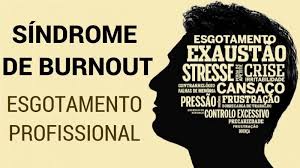
Introducción: El síndrome de burnout (SB) es un fenómeno ocupacional prevalente entre médicos, caracterizado por agotamiento emocional, sensación de ineficacia y despersonalización, con repercusiones físicas y psicológicas significativas. Objetivo: Analizar las consecuencias del síndrome de burnout en la vida personal y profesional de los médicos, identificando además factores asociados y estrategias de afrontamiento descritas en la literatura. Métodos: Se realizó una revisión narrativa de la literatura utilizando los descriptores “burnout”, “Médicos” y “Agotamiento Profesional”. Resultados: Se seleccionaron 32 artículos publicados entre 2015 y 2025, complementados con referencias clásicas sobre el tema. Discusión: La evidencia muestra que el síndrome de burnout es altamente prevalente entre médicos y afecta negativamente la vida personal, comprometiendo el bienestar emocional, las relaciones familiares y sociales. En el ámbito profesional, se asocia a mayor riesgo de errores médicos, reducción de la calidad del cuidado, ausentismo e intención de abandonar la carrera, con repercusiones económicas para los sistemas de salud debido a la rotación de profesionales. Entre los factores asociados destacan la sobrecarga de trabajo, condiciones institucionales adversas, violencia laboral y desigualdad de género. Las estrategias de afrontamiento descritas incluyen apoyo psicológico, intervenciones institucionales y herramientas digitales, aunque las medidas individuales aisladas muestran efectividad limitada. Conclusión: El síndrome de burnout en médicos compromete la salud personal, la calidad asistencial y la eficiencia institucional. Su prevención requiere no solo acciones individuales, sino también medidas estructurales e institucionales que promuevan el bienestar profesional.
Descargas
Métricas
Citas
1. Freudenberger HJ, York N. Staff Burn-Out. J Soc Issues. 1974;30(1):159-65. https://doi.org/10.1111/j.1540-4560.1974.tb00706.x
2. Maslach C, Jackson SE. The measurement of experienced burnout. J Organ Behav. 1981;2(2):99-113. https://doi.org/10.1002/job.4030020205
3. Tement S, Ketiš ZK, Miroševič Š, Selič-Zupančič P. The impact of Psychological Interventions with Elements of Mindfulness (PIM) on empathy, well-being, and reduction of burnout in physicians: a systematic review. Int J Environ Res Public Health. 2021;18(21):11181. https://doi.org/10.3390/ijerph182111181 PMid:34769700 PMCid:PMC8582910
4. World Health Organization. International Classification of Diseases [Internet]. 11th ed. Geneve: WHO; 2019[citado 2025 Set. 13]. Disponível em: https://icd.who.int/en
5. Shanafelt TD, West CP, Sinsky C, Trockel M, Tutty M, Satele D V., Carlasare LE, Dyrbye LN. Changes in Burnout and satisfaction with work-life integration in physicians and the general us working population between 2011 and 2017. Mayo Clin Proc. 2019;94:1681-94. https://doi.org/10.1016/j.mayocp.2018.10.023 PMid:30803733
6. Rotenstein LS, Torre M, Ramos MA, Rosales RC, Guille C, Sen S, Mata DA. Prevalence of Burnout among physicians: a systematic review. JAMA. 2018;320(11):1131-50. https://doi.org/10.1001/jama.2018.12777 PMid:30326495 PMCid:PMC6233645
7. Barbosa ML, Ferreira BLR, Vargas TN, Ney da Silva GM, Nardi AE, Machado S, Caixeta L. Burnout prevalence and associated factors among brazilian medical students. Clin Pract Epidemiol Ment Health. 2018;14:188-95. https://doi.org/10.2174/1745017901814010188 PMid:30258484 PMCid:PMC6128019
8. West CP, Dyrbye LN, Shanafelt TD. Physician burnout: contributors, consequences and solutions. J Intern Med 2018;283(6):516-29. https://doi.org/10.1111/joim.12752 PMid:29505159
9. Caixeta L, Silva GMN Jr, Caixeta V de M, Reimer CHR, Azevedo PVB. Occupational health, cognitive disorders and occupational neuropsychology. Dement Neuropsychol. 2012;6(4):198-202. https://doi.org/10.1590/S1980-57642012DN06040002 PMid:29213798 PMCid:PMC5619330
10. Koutsimani P, Montgomery A, Georganta K. The relationship between burnout, depression, and anxiety: a systematic review and meta-analysis. Front Psychol 2019;10:284. https://doi.org/10.3389/fpsyg.2019.00284 PMid:30918490 PMCid:PMC6424886
11. Dutheil F, Aubert C, Pereira B, Dambrun M, Moustafa F, Mermillod M, Baker JS, Trousselard M, Lesage FX, Navel V. Suicide among physicians and health-care workers: a systematic review and meta-analysis. PLoS One. 2019;14(12):0226361. https://doi.org/10.1371/journal.pone.0226361 PMid:31830138 PMCid:PMC6907772
12. Nguyen N, Spooner E, O'Balle P, Ashraf H, Heskett K, Zisook S, Davidson JE. The Relationship between depression, Burnout, and suicide among healthcare professionals: a scoping review. Worldviews Evid Based Nurs. 2025;22(3):e70037. https://doi.org/10.1111/wvn.70037 PMid:40361258 PMCid:PMC12075674
13. Menon NK, Shanafelt TD, Sinsky CA, Linzer M, Carlasare L, Brady KJS, Stillman MJ, Trockel MT. Association of physician burnout with suicidal ideation and medical errors. JAMA Netw Open. 2020;3(12):e2028780. https://doi.org/10.1001/jamanetworkopen.2020.28780 PMid:33295977 PMCid:PMC7726631
14. Shanafelt TD, Hasan O, Dyrbye LN, Sinsky C, Satele D, Sloan J, West CP. Changes in Burnout and satisfaction with work-life balance in physicians and the general us working population between 2011 and 2014. Mayo Clin Proc. 2015;90(12):1600-13. https://doi.org/10.1016/j.mayocp.2015.08.023 PMid:26653297
15. Golonka K, Mojsa-Kaja J, Blukacz M, Gawłowska M, Marek T. Occupational burnout and its overlapping effect with depression and anxiety. Int J Occup Med Environ Health. 2019;32(2):229-44. https://doi.org/10.13075/ijomeh.1896.01323 PMid:30855601
16. Ortega M V., Hidrue MK, Lehrhoff SR, Ellis DB, Sisodia RC, Curry WT, Del Carmen MG, Wasfy JH. Patterns in physician Burnout in a Stable-Linked Cohort. JAMA Netw Open. 2023;6(10):e2336745. https://doi.org/10.1001/jamanetworkopen.2023.36745 PMid:37801314 PMCid:PMC10559175
17. Wu Y, Jiang F, Ma J, Tang YL, Wang M, Liu Y. Experience of medical disputes, medical disturbances, verbal and physical violence, and Burnout among physicians in China. Front Psychol. 2021;11: 556517. https://doi.org/10.3389/fpsyg.2020.556517 PMid:33584400 PMCid:PMC7878671
18. Hodkinson A, Zhou, A, Johnson J, Geraghty K, Riley R, Zhou A, Panagopoulou E, Chew-Graham CA, Peters D, Esmail A, Panagioti, M. Associations of physician burnout with career engagement and quality of patient care: systematic review and meta-analysis. BMJ. 2022;378:e070442. https://doi.org/10.1136/bmj-2022-070442 PMid:36104064 PMCid:PMC9472104
19. Tawfik DS, Profit J, Morgenthaler TI, Satele D V., Sinsky CA, Dyrbye LN, Tutty MA, West CP, Shanafelt TD. Physician Burnout, well-being, and work unit safety grades in relationship to reported medical errors. Mayo Clin Proc. 2018;93(11):1571-80. https://doi.org/10.1016/j.mayocp.2018.05.014 PMid:30001832 PMCid:PMC6258067
20. Dewa CS, Loong D, Bonato S, Trojanowski L. The relationship between physician burnout and quality of healthcare in terms of safety and acceptability: a systematic review. BMJ Open. 2017;7(6):e015141. https://doi.org/10.1136/bmjopen-2016-015141 PMid:28637730 PMCid:PMC5734243
21. Yates SW. Physician stress and Burnout. Am J Med. 2020;133(2):160-4. https://doi.org/10.1016/j.amjmed.2019.08.034 PMid:31520624
22. Sibeoni J, Bellon-Champel L, Verneuil L, Siaugues C, Revah-Levy A, Farges O. Workplace environment around physicians' burnout: a qualitative study in French hospitals. Scand J Work Environ Health. 2021;47(7):521-30. https://doi.org/10.5271/sjweh.3977 PMid:34363393 PMCid:PMC8504159
23. Borsa A, Bejarano G, Ellen M, Bruch JD. Evaluating trends in private equity ownership and impacts on health outcomes, costs, and quality: systematic review. BMJ. 2023;382: e075244. https://doi.org/10.1136/bmj-2023-075244 PMid:37468157 PMCid:PMC10354830
24. Holmgren AJ, Hendrix N, Maisel N, Everson J, Bazemore A, Rotenstein L, Phillips RL, Adler-Milstein J. Electronic health record usability, satisfaction, and burnout for family physicians. JAMA Netw Open. 2024;7(8):e2426956. https://doi.org/10.1001/jamanetworkopen.2024.26956 PMid:39207759 PMCid:PMC11362862
25. Shanafelt TD, West CP, Dyrbye LN, Trockel M, Tutty M, Wang H, Carlasare LE, Sinsky C. Changes in Burnout and satisfaction with work-life integration in physicians during the first 2 years of the COVID-19 Pandemic. Mayo Clin Proc 2022;97(12):2248-58. https://doi.org/10.1016/j.mayocp.2022.09.002 PMid:36229269 PMCid:PMC9472795
26. Nowrouzi-Kia B, Chai E, Usuba K, Nowrouzi-Kia B, Casole J. Prevalence of type II and type III workplace violence against physicians: a systematic review and meta-analysis. Int J Occup Environ Med. 2019;10(3):99-110. https://doi.org/10.15171/ijoem.2019.1573 PMid:31325293 PMCid:PMC6708400
27. Nombera-Aznaran N, Bazalar-Palacios J, Nombera-Aznaran M, Rojas-Del-Aguila M, Aznaran-Torres R. Burnout syndrome and psychological workplace violence among Peruvian physicians: a cross-sectional study. BMC Health Serv Res. 2025;25(1):1-9. https://doi.org/10.1186/s12913-025-12387-4 PMid:40307790 PMCid:PMC12044734
28. Stehman CR, Clark RL, Purpura A, Kellogg AR. Wellness: combating burnout and its consequences in emergency medicine. West J Emerg Med. 2020;21(3):555-65. https://doi.org/10.5811/westjem.2020.1.40971 PMid:32421501 PMCid:PMC7234720
29. Lyubarova R, Salman L, Rittenberg E. Gender differences in physician burnout: driving factors and potential solutions. Perm J. 2023;27(2):130-6. https://doi.org/10.7812/TPP/23.023 PMid:37303223 PMCid:PMC10266850
30. Rotenstein L, Harry E, Wickner P, Gupte A, Neville BA, Lipsitz S, Cullen E, Rozenblum R, Sequist TD, Dudley J. Contributors to gender differences in burnout and professional fulfillment: a survey of physician faculty. Jt Comm J Qual Patient Saf. 2021;47(11):723-30. https://doi.org/10.1016/j.jcjq.2021.08.002 PMid:34507905
31. Hu Y-Y, Ellis RJ, Hewitt DB, Yang AD, Cheung EO, Moskowitz JT, Potts JR, Buyske J, Hoyt DB, Nasca TJ, Bilimoria KY. Discrimination, abuse, harassment, and Burnout in surgical residency training. N Engl J Med. 2019;381(18):1741-52. https://doi.org/10.1056/NEJMsa1903759 PMid:31657887 PMCid:PMC6907686
32. Sanfilippo F, Palumbo GJ, Noto A, Pennisi S, Minieri M, Vasile F, Dezio V, Busalacchi D, Murabito P, Astuto M. Prevalence of burnout among intensive care physicians: a systematic review. Rev Bras Ter Intensiva. 2020;32(3):458-67. https://doi.org/10.5935/0103-507X.20200076 PMid:33053037 PMCid:PMC7595726
33. Yao H, Wang P, Tang YL, Liu Y, Liu T, Liu H, Chen Y, Jiang F, Zhu J. Burnout and job satisfaction of psychiatrists in China: a nationwide survey. BMC Psychiatry. 2021;21(1):593. https://doi.org/10.1186/s12888-021-03568-6 PMid:34819029 PMCid:PMC8612106
34. Haslam A, Tuia J, Miller SL, Prasad V. Systematic review and meta-analysis of randomized trials testing interventions to reduce physician Burnout. Am J Med. 2024;137(3):249-257.e1. https://doi.org/10.1016/j.amjmed.2023.10.003 PMid:37890569
35. Kiser SB, Sterns JD, Lai PY, Horick NK, Palamara K. Physician Coaching by professionally trained peers for Burnout and well-being: a randomized clinical trial. JAMA Netw Open. 2024;7(4):e245645. https://doi.org/10.1001/jamanetworkopen.2024.5645 PMid:38607628 PMCid:PMC11015346
36. Ligibel JA, Goularte N, Berliner JI, Bird SB, Brazeau CMLR, Rowe SG, Stewart MT, Trockel MT. Well-Being parameters and intention to leave current institution among academic physicians. JAMA Netw Open. 2023;6(12):E2347894. https://doi.org/10.1001/jamanetworkopen.2023.47894 PMid:38100103 PMCid:PMC10724765
Publicado
Cómo citar
Número
Sección
Licencia
Derechos de autor 2025 Mariza Corrêa Petrini, Bruna Vieira Andrade, Luiz Alexandre Viana Magno

Esta obra está bajo una licencia internacional Creative Commons Atribución-NoComercial 4.0.
Debates em Psiquiatria permite que el (los) autor (es) mantenga(n) sus derechos de autor sin restricciones. Permite al (los) autor (es) conservar sus derechos de publicación sin restricciones. Los autores deben garantizar que el artículo es un trabajo original sin fabricación, fraude o plagio; no infringe ningún derecho de autor o derecho de propiedad de terceros. Los autores también deben garantizar que cada uno atendió a los requisitos de autoría conforme a la recomendación del ICMJE y entienden que, si el artículo o parte de él es fallido o fraudulento, cada autor comparte la responsabilidad.
Reconocimiento-NoComercial 4.0 internacional (CC BY-NC 4.0) - Debates em Psiquiatria es regida por la licencia CC-BY-NC
Usted es libre de:
- Compartir — copiar y redistribuir el material en cualquier medio o formato
- Adaptar — remezclar, transformar y crear a partir del material
El licenciador no puede revocar estas libertades mientras cumpla con los términos de la licencia. Bajo las condiciones siguientes:
- Reconocimiento — Debe reconocer adecuadamente la autoría, proporcionar un enlace a la licencia e indicar si se han realizado cambios<. Puede hacerlo de cualquier manera razonable, pero no de una manera que sugiera que tiene el apoyo del licenciador o lo recibe por el uso que hace.
- NoComercial — No puede utilizar el material para una finalidad comercial.
No hay restricciones adicionales — No puede aplicar términos legales o medidas tecnológicas que legalmente restrinjan realizar aquello que la licencia permite.