Street outreach clinics and walk-in in 'Cracolândia': an analysis of patient profiles in specialized service
DOI:
https://doi.org/10.25118/2763-9037.2025.v15.1476Keywords:
homeless person, street clinic, substance use disorder, crack, cracolandiaAbstract
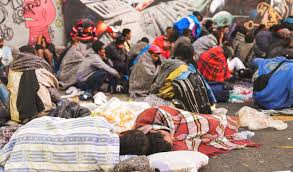
Introduction: Substance use presents a significant challenge in large metropolises, especially in Open Drug Scenes like "Cracolândia" in São Paulo. This study aimed to compare the profile of patients referred by the Street Clinic (Consultório na Rua - CnaR) teams with those who sought treatment spontaneously at a specialized service located in "Cracolândia" Method: This was a retrospective observational study that analyzed 9,053 patient records from the Crack and Other Drugs Care HUB between June 2024 and January 2025. Sociodemographic data, substance use indicators, and mental health indicators were collected. Results: CnaR proved effective in referring a higher proportion of homeless individuals (74.22%), those from "Cracolândia" (82.50%), and Black (17.41%) and Pardo (55.82%) individuals, demonstrating its capacity to reach highly vulnerable groups. However, women were not adequately accessed. It was observed that individuals referred by CnaR showed a higher prevalence of crack (81.01%) and marijuana (62.42%) use, while individuals who arrived at the service by spontaneous demand showed a higher prevalence of synthetic cannabinoid use (20.68%). There was no significant difference, however, in indicators of suicide, abstinence, and psychotic symptoms between the groups. Conclusion: The results of this study indicate that CnaR has reached diverse groups in its outreach and referral work. Nevertheless, the findings also highlight the importance of improving sensitivity and the capacity to welcome women.
Downloads
Metrics
References
1. Ministério da Saúde (BR). Portaria N. 122, de 25 de Janeiro de 2011. Define as diretrizes de organização e funcionamento das Equipes de Consultório na Rua [Internet]. Brasília: Ministério da Saúde; 2011 [citado 2025 Jun. 2]. Disponível em: https://bvsms.saude.gov.br/bvs/saudelegis/gm/2012/prt0122_25_01_2012.html
2. Brasil. Decreto Nº 7053 de Dezembro de 2009. Institui a Política Nacional para a População em Situação de Rua e o seu Comitê Intersetorial de Acompanhamento e Monitorament, e dá outras providências [Internet]. Brasília: Presidência da República; 2009 [citado 2025 Jun. 2]. Disponível em: https://www.planalto.gov.br/ccivil_03/_ato2007-2010/2009/decreto/d7053.htm
3. Ministério dos Direitos Humanos e da Cidadania (BR). Plano de Ação e Monitoramento para Efetivação da Política Nacional para a População em Situação de Rua [Internet]. Brasília: Ministério dos Direitos Humanos e da Cidadani; 2023 [citado 2025 Jun. 2]. Disponível em: https://www.gov.br/mdh/pt-br/navegue-por-temas/populacao-em-situacao-de-rua/publicacoes/plano-nacional-ruas-visiveis.pdf
4. Silva CC da, Cruz MM da, Vargas EP. Práticas de cuidado e população em situação de rua: o caso do Consultório na Rua. Saúde Debate. 2015;39:246-56. https://doi.org/10.5935/0103-1104.2015S005270
5. Hallais JA da S, Barros NF de. Consultório na Rua: visibilidades, invisibilidades e hipervisibilidade. Cad Saúde Pública. 2015;31(7):1497-504. https://doi.org/10.1590/0102-311X00143114 PMid:26248104
6. Brito C, Silva LN da. População em situação de rua: estigmas, preconceitos e estratégias de cuidado em saúde. Ciênc Saúde Coletiva. 2022;27(1):151-60. https://doi.org/10.1590/1413-81232022271.19662021 PMid:35043894
7. Ministério da Saúde (BR). Manual sobre o cuidado à saúde junto a população em situação de rua [Internet]. Brasília: Ministério da Saúde; 2012 [citado 2025 Jun. 2]. Disponível em: https://www.gov.br/saude/pt-br/composicao/saps/equidade/publicacoes/populacao-em-situacao-de-rua/manual_cuidado_populalcao_rua.pdf
8. Waal H, Clausen T, Gjersing L, Gossop M. Open drug scenes: responses of five European cities. BMC Public Health. 2014;14(1):853. https://doi.org/10.1186/1471-2458-14-853 PMid:25128331 PMCid:PMC4141096
9. Bless R, Korf DJ, Freeman M. Open Drug Scenes: A Cross-National Comparison of Concepts and Urban Strategies. Eur Addict Res. 1995;1(3):128-38. https://doi.org/10.1159/000259053
10. Madruga CS, Barreto KIDS, Seabra D, Miguel AC, Silva CJD, Apolinário GS, Godoy G, Lidiane RN, Ferreira NA, Cordeiro Q, Bosso RA, Laranjeira RR. Levantamento de Cenas de Uso em capitais: achados principais de São Paulo, Fortaleza e Brasília. Rev Bras Epidemiol. 2025;28:e250008. https://doi.org/10.1590/1980-549720250008.2
11. Rui T. Fluxos de uma territorialidade: duas décadas de "cracolândia" (1995-2014). In: Kowarick L, Frugoli JL, editores. Pluralidade Urbana em São Paulo. São Paulo: Editora 34; 2016. p. 225-248.
12. Meneses-Gaya C de, Zuardi AW, Loureiro SR, Crippa JAS. Alcohol Use Disorders Identification Test (AUDIT): an updated systematic review of psychometric properties. Psychol Neurosci. 2009;2(1):83-97. https://doi.org/10.3922/j.psns.2009.1.12
13. Henrique IFS, Micheli D, Lacerda RB de, Lacerda LA de, Formigoni MLO de S. Validação da versão brasileira do teste de triagem do envolvimento com álcool, cigarro e outras substâncias (ASSIST). Rev Assoc Médica Bras. 2004;50(2):199-206. https://doi.org/10.1590/S0104-42302004000200039 PMid:15286871
14. World Health Organization. The Alcohol, Smoking and Substance involvement Screening Test (ASSIST): manual for use in primary care [Internet]. Geneve: WHO; 2010 [citado 2025 Jun. 2]. Disponível em: https://www.who.int/publications/i/item/978924159938-2
15. Tommasello AC, Myers CP, Gillis L, Treherne LL, Plumhoff M. Effectiveness of outreach to homeless substance abusers. Eval Program Plann. 1999;22(3):295-303. https://doi.org/10.1016/S0149-7189(99)00019-1 PMid:24011449
16. Fisk D, Rakfeldt J, McCormack E. Assertive outreach: An effective strategy for engaging homeless persons with substance use disorders into treatment. Am J Drug Alcohol Abuse. 2006;32(3):479-86. https://doi.org/10.1080/00952990600754006 PMid:16864475
17. Brubaker MD, Amatea EA, Torres-Rivera E, Miller MD, Nabors L. Barriers and Supports to Substance Abuse Service Use Among Homeless Adults. J Addict Offender Couns. 2013;34(2):81-98. https://doi.org/10.1002/j.2161-1874.2013.00017.x
18. Ramsay N, Hossain R, Moore M, Milo M, Brown A. Health Care While Homeless: Barriers, Facilitators, and the Lived Experiences of Homeless Individuals Accessing Health Care in a Canadian Regional Municipality. Qual Health Res. 2019;29(13):1839-49. https://doi.org/10.1177/1049732319829434 PMid:30810072
19. Cernadas A, Fernández Á. Healthcare inequities and barriers to access for homeless individuals: a qualitative study in Barcelona (Spain). Int J Equity Health. 2021;20(1):84. https://doi.org/10.1186/s12939-021-01409-2 PMid:33743729 PMCid:PMC7980324
20. Oliveira MA de, Boska G de A, Oliveira MAF de, Barbosa GC. O acesso à saúde pela população em situação de rua da Avenida Paulista: barreiras e percepções. Rev Esc Enferm USP. 2021;55:e03744. https://doi.org/10.1590/s1980-220x2020033903744 PMid:34259755
21. United Nations. Office on Drugs and Crime. Key findings and conclusions [Internet]. Vienna: UN; 2024 [citado 2025 Jun. 2]. Disponível em: https://www.unodc.org/unodc/en/data-and-analysis/wdr2024-key-findings-conclusions.html
22. United Nations. Office on Drugs and Crime. Substance abuse treatment and care for women [Internet]. Vienna: UM; 2004 [citado 2025 Jun. 2]. Disponível em: https://www.unodc.org/unodc/en/drug-prevention-and-treatment/publications/data/2004/substance-abuse-treatment-and-care-for-women.html
23. Albuquerque C de S, Nóbrega M do PSS. Barreiras e facilidades encontradas por mulheres usuárias de substâncias psicoativas na busca por tratamento especializado. SMAD Rev Eletrônica Saúde Ment Álcool e Drog. 2016;12(1):22-9. https://doi.org/10.11606/issn.1806-6976.v12i1p22-29
24. Upshur CC, Jenkins D, Weinreb L, Gelberg L, Orvek EA. Homeless women's service use, barriers, and motivation for participating in substance use treatment. Am J Drug Alcohol Abuse. 2018;44(2):252-62. https://doi.org/10.1080/00952990.2017.1357183.
PMid:28806101 PMCid:PMC6088786
Published
How to Cite
Issue
Section
License
Copyright (c) 2025 Danilo Silveira Seabra, Clarice Sandi Madruga, Martha Canfield, Kátia Isicawa de Sousa Barreto, Kelly Couto, Aline Corrêa de Araujo, Carmen Miziara, Quirino Cordeiro, Ronaldo Laranjeira

This work is licensed under a Creative Commons Attribution-NonCommercial 4.0 International License.
Debates em Psiquiatria allows the author (s) to keep their copyrights unrestricted. Allows the author (s) to retain their publication rights without restriction. Authors should ensure that the article is an original work without fabrication, fraud or plagiarism; does not infringe any copyright or right of ownership of any third party. Authors should also ensure that each one complies with the authorship requirements as recommended by the ICMJE and understand that if the article or part of it is flawed or fraudulent, each author shares responsibility.
Attribution-NonCommercial 4.0 International (CC BY-NC 4.0) - Debates em Psiquiatria is governed by the licencse CC-By-NC
You are free to:
- Share — copy and redistribute the material in any medium or format
- Adapt — remix, transform, and build upon the material
The licensor cannot revoke these freedoms as long as you follow the license terms. Under the following terms:
- Attribution — You must give appropriate credit, provide a link to the license, and indicate if changes were made. You may do so in any reasonable manner, but not in any way that suggests the licensor endorses you or your use.
- NonCommercial — You may not use the material for commercial purposes.
No additional restrictions — You may not apply legal terms or technological measures that legally restrict others from doing anything the license permits.