Post-colectomy depressive disorder: case report
DOI:
https://doi.org/10.25118/2763-9037.2025.v15.1483Keywords:
Colectomy;, Enterostomy, Depressive Disorder, Mental Health, Multidisciplinary TeamAbstract
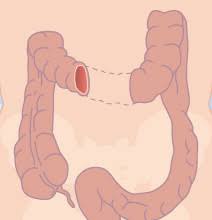
Enterostomy is a surgical procedure indicated for various conditions, such as colorectal cancer, and consists of removing a portion of the intestine through the abdominal wall. Although it is an essential therapeutic approach, it has significant physical, social, and psychological repercussions, particularly in the development of depressive disorders. Study initiated upon signature of the Free and Informed Consent Form (FICF) by the patient and approval by the Research Ethics Committee of the Faculdade de Ciências Médicas e da Saúde PUC-SP, whose opinion number is 7,633,080 and CAAE is 88752825.5.0000.5373. The study aims to report the case of a patient diagnosed with ovarian cancer with intestinal metastasis, who underwent colectomy and colostomy and developed symptoms compatible with Depressive Disorder Due to Another Medical Condition, according to DSM-5-TR criteria. The temporal and causal correlation between the surgical procedure and the onset of symptoms, combined with discourse analysis, clinical progression, and risk factors, supports the diagnosis. Differential diagnoses, such as Posttraumatic Stress Disorder and Adjustment Disorder, were considered, but did not meet sufficient criteria. The patient's management included psychotherapy and pharmacotherapy with antidepressants, hampered by her refractoriness to first-line medications. The case illustrates the importance of understanding the various mechanisms involved in the pathophysiology, such as alterations in the intestinal microbiota, neuroinflammation, changes in quality of life, and difficulties with self-acceptance. It also highlights the need for monitoring by a multidisciplinary team and early interventions that promote mental health support for these patients, in order to minimize psychological distress and improve postoperative quality of life. Regular follow-up is also required to assess adverse effects of pharmacological therapy and deprescribe the drug at an appropriate time.
Downloads
Metrics
References
1. Tang WSW, Chiang LLC, Kwang KW, Zhang MWB. Prevalence of depression and its potential contributing factors in patients with enterostomy: A meta-analytical review. Front Psychiatry. 2022;13:1001232. https://doi.org/10.3389/fpsyt.2022.1001232 PMid:36532192 PMCid:PMC9756805
2. Costa SM, Soares YM, Silva ILBB, Linhares FMP, Azevedo PR, Silva LDC, Dias RS, Sousa SMA. Qualidade de vida das pessoas com estomias intestinais e fatores associados. Texto Contexto Enferm. 2023;32:e20230118. https://doi.org/10.1590/1980-265x-tce-2023-0118pt
3. Vonk-Klaassen SM, de Vocht HM, den Ouden ME, Eddes EH, Schuurmans MJ. Ostomy-related problems and their impact on quality of life of colorectal cancer ostomates: a systematic review. Qual Life Res. 2016;25(1):125-33. https://doi.org/10.1007/s11136-015-1050-3 PMid:26123983 PMCid:PMC4706578
4. Bruzeguini MV, Pereira TF, Pagel ML, Lemos TC, Prata ES, Cruz KC, Sarti TD, Viana MC. Instrumentos de rastreio e diagnóstico de transtornos depressivos utilizados na atenção primária: uma revisão integrativa. Rev Bras Med Fam Comunidade. 2023;18(45):1-17. https://doi.org/10.5712/rbmfc18(45)3817
5. Foster JA, McVey K-AN. Gut-brain axis: how the microbiome influences anxiety and depression. Trends Neurosci. 2013;36(5):305-12. https://doi.org/10.1016/j.tins.2013.01.005 PMid:23384445
6. Beurel E, Toups M, Nemeroff CB. The Bidirectional Relationship of Depression and Inflammation: Double Trouble. Neuron. 2020;107(2):234-56. https://doi.org/10.1016/j.neuron.2020.06.002 PMid:32553197 PMCid:PMC7381373
7. Diniz IV, Costa IKF, Nascimento JA, Silva IP, Mendonça AEO, Soares MJGO. Factors associated to quality of life in people with intestinal stomas. Rev Esc Enferm USP. 2021;55:e20200377. https://doi.org/10.1590/1980-220x-reeusp-2020-0377 PMid:34423799
8. Buckman JEJ, Underwood A, Clarke K, Saunders R, Hollon SD, Fearon P, Pilling S. Risk factors for relapse and recurrence of depression in adults and how they operate: A four-phase systematic review and meta-synthesis. Clin Psychol Rev. 2018;64:13-38. https://doi.org/10.1016/j.cpr.2018.07.005 PMid:30075313 PMCid:PMC6237833
9. Chau R, Kissane DW, Davison TE. Risk factors for depression in long-term care: a prospective observational cohort study. Clinical Gerontologist, 2021; 44:112-25. https://doi.org/10.1080/07317115.2019.1635548 PMid:31264523
10. American Psychiatric Association. Diagnostic and statistical manual of mental disorders: DSM-5-TR [Internet]. 5th ed. Arlington: American Psychiatric Publishing; 2022. https://doi.org/10.1176/appi.books.9780890425596
11. Krezalek MA, Skowron KB, Guyton KL, Shakhsheer B, Hyoju S, Alverdy JC. The intestinal microbiome and surgical disease. Curr Probl Surg. 2016;53(6):257-93. https://doi.org/10.1067/j.cpsurg.2016.06.001 PMid:27497246 PMCid:PMC5079158
12. Casey P, Jabbar F, O'Leary E, Doherty AM. Suicidal behaviours in adjustment disorder and depressive episode. J Affect Disord. 2015;174:441-6 https://doi.org/10.1016/j.jad.2014.12.003 PMid:25553405
13. Sequeira MVM, Roiz PFB, Vasconcelos DMT, Bonfá TJM, Savariego BOB, Almeira JCS, Lobo SZ, Coral GP, Ferreira FC, Garcia AF, Souza LG, Vieira CV, Mello MSB, Matos LNP, Silva TP. Intervenções Farmacológicas e não Farmacológicas para Transtorno de Estresse pós-traumático. Braz J Implantol Health Sci. 2025;7(4):1437-55. https://doi.org/10.36557/2674-8169.2025v7n4p1437-1455
14. O'Donnell ML, Metcalf O, Watson L, Phelps A, Varker T. A Systematic Review of Psychological and Pharmacological Treatments for Adjustment Disorder in Adults. J Trauma Stress. 2018;31(3):321-331. https://doi.org/10.1002/jts.22295 PMid:29958336
15. Fawcett J, Barkin RL. Review of the results from clinical studies on the efficacy, safety and tolerability of mirtazapine for the treatment of patients with major depression. J Affect Disord. 1998;51(3):267-85. https://doi.org/10.1016/S0165-0327(98)00224-9 PMid:10333982
16. Hong JSW, Atkinson LZ, Al-Juffali N, Awad A, Geddes JR, Tunbridge EM, Harrison PJ, Cipriani A. Gabapentin and pregabalin in bipolar disorder, anxiety states, and insomnia: systematic review, meta-analysis, and rationale. Mol Psychiatry. 2022;27(3):1339-49. https://doi.org/10.1038/s41380-021-01386-6 PMid:34819636 PMCid:PMC9095464
17. Chae WR, Nagel JM, Kuehl LK, Gold SM, Wingenfeld K, Otte C. Predictors of response and remission in a naturalistic inpatient sample undergoing multimodal treatment for depression. J Affect Disord. 2019;252:99-106. https://doi.org/10.1016/j.jad.2019.04.044 PMid:30981062
18. Zou J, Jia H, Wang J, Li Y. Social Isolation as a Significant Risk Factor for Depression in Colorectal Cancer Patients Post-Colostomy: A Cross-Sectional Study. Front Psychiatry. 2025;16:1588314. https://doi.org/10.3389/fpsyt.2025.1588314 PMid:40462874 PMCid:PMC12129959
19. Aquino PMKTA, Carvalho, KP, Barroso WA, Galiza ABA. Desafios enfrentados por pacientes ostomizados. Rev Eletr Acervo Saúde. 2025;25:e17001. https://doi.org/10.25248/reas.e17001.2025
20. Polidano K, Chew-Graham CA, Farmer AD, Saunders B. Access to Psychological Support for Young People Following Stoma Surgery: Exploring Patients' and Clinicians Perspectives. Qual Health Res. 2021;31(3):535-49. https://doi.org/10.1177/1049732320972338 PMid:33228473 PMCid:PMC7802047
Published
How to Cite
Issue
Section
License
Copyright (c) 2025 Luiz Lippi Rachkorsky, Isabella Pacifico Hildebrandi, Giulia de Moraes Grilo, Julia Mores Schumacher

This work is licensed under a Creative Commons Attribution-NonCommercial 4.0 International License.
Debates em Psiquiatria allows the author (s) to keep their copyrights unrestricted. Allows the author (s) to retain their publication rights without restriction. Authors should ensure that the article is an original work without fabrication, fraud or plagiarism; does not infringe any copyright or right of ownership of any third party. Authors should also ensure that each one complies with the authorship requirements as recommended by the ICMJE and understand that if the article or part of it is flawed or fraudulent, each author shares responsibility.
Attribution-NonCommercial 4.0 International (CC BY-NC 4.0) - Debates em Psiquiatria is governed by the licencse CC-By-NC
You are free to:
- Share — copy and redistribute the material in any medium or format
- Adapt — remix, transform, and build upon the material
The licensor cannot revoke these freedoms as long as you follow the license terms. Under the following terms:
- Attribution — You must give appropriate credit, provide a link to the license, and indicate if changes were made. You may do so in any reasonable manner, but not in any way that suggests the licensor endorses you or your use.
- NonCommercial — You may not use the material for commercial purposes.
No additional restrictions — You may not apply legal terms or technological measures that legally restrict others from doing anything the license permits.