Criminal responsibility, and neuroscience: contemporary challenges
DOI:
https://doi.org/10.25118/2763-9037.2026.v16.1579Keywords:
neuroscience, criminal liability, forense psychiatry, violent behavior, criminal law, neurolaw, non-imputability, not criminally responsibleAbstract
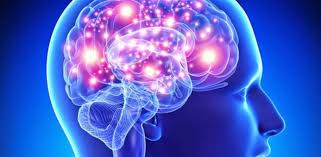
Advances in neuroscience have expanded the debate on criminal responsibility and the foundations of contemporary criminal law. Research in neuroimaging, neuropsychology, and psychiatry has shown that alterations in brain circuits involved in impulse control, decision-making, and emotional regulation may influence human behavior, including violent conduct. These findings have contributed to improving forensic psychiatric evaluations, particularly in cases involving mental disorders, brain injuries, or significant cognitive impairments. However, the interpretation of such data requires caution in order to avoid reductionist explanations of criminal behavior based solely on biological factors. This article discusses the contributions of neuroscience to the understanding of criminal responsibility, addressing topics such as impulsivity, premeditation, brain development during adolescence, violence risk assessment, and evidence-based crime prevention. The study concludes that criminal behavior should be understood within a biopsychosocial framework in which neuroscientific findings interact with psychological, social, and legal factors, contributing to more comprehensive forensic assessments without replacing the normative foundations of criminal law.
Downloads
Metrics
References
1. Greene J, Cohen J. For the law, neuroscience changes nothing and everything. Philos Trans R Soc Lond B Biol Sci. 2004;359(1451):1775-1785. https://doi.org/10.1098/rstb.2004.1546 PMid:15590618 PMCid:PMC1693457
2. Raine A. The anatomy of violence: the biological roots of crime. New York: Pantheon Books; 2013. https://doi.org/10.1037/e569292014-001
3. Blair RJR. The neurobiology of psychopathic traits in youths. Nat Rev Neurosci. 2013;14(11):786-99. https://doi.org/10.1038/nrn3577 PMid:24105343 PMCid:PMC4418507
4. Buckholtz JW, Marois R. The roots of modern justice: cognitive and neural foundations of social norms and their enforcement. Nat Neurosci. 2012;15(5):655-61. https://doi.org/10.1038/nn.3087 PMid:22534578
5. Morse SJ. Brain overclaim syndrome and criminal responsibility: a diagnostic note. Ohio State J of Crim Law. 2006;3:397-412. https://www.antoniocasella.eu/dnlaw/Morse_2006.pdf
6. Valença AM, Barros AJS, da Silva AG, Telles LEB. Componentes psicológicos e comportamentais da criminalidade. Debates Psiquiatr. 2022;12:1-7. https://doi.org/10.25118/2763-9037.2022.v12.280
7. Valença AM, Telles LEB, Dourado Junior JB, Meyer LF, Rigonatti LF, Moraes TM, da Silva AG, Nardi AE. A violência e seus aspectos clínicos, sociais e psiquiátricos-forenses. Debates Psiquiatr. 2024;14:1-8. https://doi.org/10.25118/2763-9037.2024.v14.1218
8. Moeller FG, Barratt ES, Dougherty DM, Schmitz JM, Swann AC. Psychiatric aspects of impulsivity. Am J Psychiatry. 2001;158:1783-93. https://doi.org/10.1176/appi.ajp.158.11.1783 PMid:11691682
9. Coccaro EF, Berkowitz L. Aggression: psychiatric perspectives. In: Sadock BJ, Sadock VA, Ruiz P,
editors. Kaplan & Sadock's Comprehensive Textbook of Psychiatry. Philadelphia: Wolters Kluwer; 2021.
10. Steinberg L. A social neuroscience perspective on adolescent risk-taking. Dev Rev. 2008;28(1):78-106. https://doi.org/10.1016/j.dr.2007.08.002 PMid:18509515 PMCid:PMC2396566
11. Farrington DP. Developmental and life-course criminology. Criminology. 2003;41:221-55. https://doi.org/10.1111/j.1745-9125.2003.tb00987.x
12.Fazel S, Singh JP, Doll H, Grann M. Use of risk assessment instruments to predict violence and antisocial behaviour. BMJ. 2012;345:e4692. https://doi.org/10.1136/bmj.e4692 PMid:22833604 PMCid:PMC3404183
Published
How to Cite
Issue
Section
License
Copyright (c) 2026 Alexandre Martins Valença, Jose Brasileiro Dourado Junior, Lisieux Elaine de Borba Telles, Antônio Geraldo da Silva, Antonio Egidio Nardi, Leonardo Fernandez Meyer, Luiz Felipe Rigonatti, Talvane Marins de Moraes, Milena Ferreira França Alexandre

This work is licensed under a Creative Commons Attribution-NonCommercial 4.0 International License.
Debates em Psiquiatria allows the author (s) to keep their copyrights unrestricted. Allows the author (s) to retain their publication rights without restriction. Authors should ensure that the article is an original work without fabrication, fraud or plagiarism; does not infringe any copyright or right of ownership of any third party. Authors should also ensure that each one complies with the authorship requirements as recommended by the ICMJE and understand that if the article or part of it is flawed or fraudulent, each author shares responsibility.
Attribution-NonCommercial 4.0 International (CC BY-NC 4.0) - Debates em Psiquiatria is governed by the licencse CC-By-NC
You are free to:
- Share — copy and redistribute the material in any medium or format
- Adapt — remix, transform, and build upon the material
The licensor cannot revoke these freedoms as long as you follow the license terms. Under the following terms:
- Attribution — You must give appropriate credit, provide a link to the license, and indicate if changes were made. You may do so in any reasonable manner, but not in any way that suggests the licensor endorses you or your use.
- NonCommercial — You may not use the material for commercial purposes.
No additional restrictions — You may not apply legal terms or technological measures that legally restrict others from doing anything the license permits.