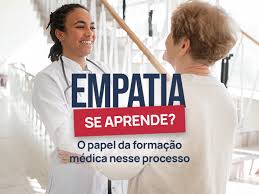
Empathy in medical education: a conceptual review of modulating factors across training
DOI:
https://doi.org/10.25118/2763-9037.2026.v16.1587Keywords:
empathy, medical, students, educationAbstract
Introduction: Empathy is a core competence in medical education and a predictor of patient satisfaction, adherence, diagnostic accuracy, and overall clinical outcomes. Despite its importance, evidence consistently shows a decline in empathy during medical training, especially during clinical years. Objective: This conceptual review synthesizes theoretical and empirical perspectives on five major modulating factors of empathy among medical students: gender, stress and burnout, socioeconomic context, social support, and progression through medical school. Method: We followed the criteria proposed by the SANRA scale to maintain the study's quality. Discussion: Drawing on key international studies, we discuss the dynamic and fragile nature of empathy, the controversies surrounding its measurement, and the role of psychosocial and environmental determinants. Conclusion: We conclude by proposing a conceptual model that integrates these determinants and emphasizes the need for institutional strategies to sustain empathy throughout medical training.
Downloads
Metrics
References
1. Adriaense JEC, Koski SE, Huber L, Lamm C. Challenges in the comparative study of empathy and related phenomena in animals. Neurosci Biobehav Rev. 2020;112:62-82. https://doi.org/10.1016/j.neubiorev.2020.01.021 PMid:32001272
2. Heyes C. Empathy is not in our genes. Neurosci Biobehav Rev. 2018;95:499-507. https://doi.org/10.1016/j.neubiorev.2018.11.001 PMid:30399356
3. Chen D, Lew R, Hershman W, Orlander J. A cross-sectional measurement of medical student empathy. J Gen Intern Med. 2007;22(10):1434-8. https://doi.org/10.1007/s11606-007-0298-x PMid:17653807 PMCid:PMC2305857
4. Santiago LM, Rosendo I, Coutinho ML, Maurício KS, Neto I, Simões JA. Comparing empathy in medical students of two Portuguese medicine schools. BMC Med Educ. 2020;20(1):153. https://doi.org/10.1186/s12909-020-02034-3 PMid:32404095 PMCid:PMC7218824
5. Luna D, Alcorta-Garza A, Moncada-Heredia S, Miranda-Mercado FS, Urquiza-Flores DI, Figuerola-Escoto RP, Lezana-Fernández MA, Meneses-González F. General empathy and medical empathy in Mexican medical students: Integration of an empathic profile. Cir Cir. 2022;90(4):517-24. https://doi.org/10.24875/CIRU.21000102 PMID: 35944455.
6. Sobczak K, Zdun-Ryżewska A, Rudnik A. Intensity, dynamics and deficiencies of empathy in medical and non-medical students. BMC Med Educ. 2021;21(1):487. https://doi.org/10.1186/s12909-021-02927-x PMid:34507587 PMCid:PMC8429476
7. Youssef FF, Nunes P, Sa B, Williams S. An exploration of changes in cognitive and emotional empathy among medical students in the Caribbean. Int J Med Educ. 2014;5:185-92. https://doi.org/10.5116/ijme.5412.e641 PMid:25341229 PMCid:PMC4216728
8. Fnais N, Soobiah C, Chen MH, Lillie E, Perrier L, Tashkhandi M, Straus SE, Mamdani M, Al-Omran M, Tricco AC. Harassment and discrimination in medical training: a systematic review and meta-analysis. Acad Med. 2014;89(5):817-27. https://doi.org/10.1097/ACM.0000000000000200 PMid:24667512
9. Capdevila-Gaudens P, García-Abajo JM, Flores-Funes D, García-Barbero M, García-Estañ J. Depression, anxiety, burnout and empathy among Spanish medical students. PLoS One. 2021;16(12):e0260359. https://doi.org/10.1371/journal.pone.0260359 PMid:34855803 PMCid:PMC8638989
10. Sukhera J. Narrative Reviews in Medical Education: Key Steps for Researchers. J Grad Med Educ. 2022;14(4):418-19. https://doi.org/10.4300/JGME-D-22-00481.1 PMid:35991097 PMCid:PMC9380643
11. Baethge C, Goldbeck-Wood S, Mertens S. SANRA-a scale for the quality assessment of narrative review articles. Res Integr Peer Rev. 2019;4:5. https://doi.org/10.1186/s41073-019-0064-8 PMid:30962953 PMCid:PMC6434870
12. Sobczak K, Zdun-Ryżewska A, Rudnik A. Intensity, dynamics and deficiencies of empathy in medical and non-medical students. BMC Med Educ. 2021;21(1):487. https://doi.org/10.1186/s12909-021-02927-x PMID: 34507587; PMCID: PMC8429476.
13. Zdun-Ryżewska A, Sobczak K, Rudnik A. Fatigue, Pro-Social Attitude and Quality of Life as Predictors of Empathy in Medical and Social-Oriented Students. Int J Environ Res Public Health. 2022;19(23):15853. https://doi.org/10.3390/ijerph192315853 PMid:36497926 PMCid:PMC9735796
14. Park KH, Kim DH, Kim SK, Yi YH, Jeong JH, Chae J, Hwang J, Roh H. The relationships between empathy, stress and social support among medical students. Int J Med Educ. 2015;6:103-8. https://doi.org/10.5116/ijme.55e6.0d44 PMid:26342190 PMCid:PMC4561553
15. Shin HS, Park H, Lee YM. The relationship between medical students' empathy and burnout levels by gender and study years. Patient Educ Couns. 2022;105(2):432-39. https://doi.org/10.1016/j.pec.2021.05.036 PMid:34127334
16. Santiago LM, Rosendo I, Coutinho ML, Maurício KS, Neto I, Simões JA. Comparing empathy in medical students of two Portuguese medicine schools. BMC Med Educ. 2020;20(1):153. https://doi.org/10.1186/s12909-020-02034-3 PMID: 32404095; PMCID: PMC7218824
17. Santos MA, Grosseman S, Morelli TC, Giuliano IC, Erdmann TR. Empathy differences by gender and specialty preference in medical students: a study in Brazil. Int J Med Educ. 2016;7:149-53. https://doi.org/10.5116/ijme.572f.115f PMid:27213505 PMCid:PMC4885636
18. Irfan M, Saleem U, Sethi MR, Abdullah AS. Do We Need To Care: Emotional Intelligence And Empathy Of Medical And Dental Students. J Ayub Med Coll Abbottabad. 2019;31(1):76-81. https://pubmed.ncbi.nlm.nih.gov/30868789/ PMID: 30868789.
19. Youssef FF, Nunes P, Sa B, Williams S. An exploration of changes in cognitive and emotional empathy among medical students in the Caribbean. Int J Med Educ. 2014;5:185-92. https://doi.org/10.5116/ijme.5412.e641 PMID: 25341229; PMCID: PMC4216728
20. Venkataraman S, Nguyen M, Chaudhry SI, Desai MM, Fancher TL, Hajduk AM, Mason HRC, Webber A, Boatright D. Gender Discrimination and Medical Student Development. medRxiv [Preprint]. 2025:2025.02.06.25321787. https://doi.org/10.1101/2025.02.06.25321787 PMID: 39974141; PMCID: PMC11838681.
21. Skan O, Tregidgo L, Tizzard J, Westlake I, Joji N. Examining medical students' experience of gender-based discrimination and sexual harassment from clinical teachers at a UK medical school. Med Teach. 2025;47(2):300-08. https://doi.org/10.1080/0142159X.2024.2331034 PMid:38564885
Published
How to Cite
Issue
Section
License
Copyright (c) 2026 Bianca Rocha Bergamasco, Marcelo Feijó Mello

This work is licensed under a Creative Commons Attribution-NonCommercial 4.0 International License.
Debates em Psiquiatria allows the author (s) to keep their copyrights unrestricted. Allows the author (s) to retain their publication rights without restriction. Authors should ensure that the article is an original work without fabrication, fraud or plagiarism; does not infringe any copyright or right of ownership of any third party. Authors should also ensure that each one complies with the authorship requirements as recommended by the ICMJE and understand that if the article or part of it is flawed or fraudulent, each author shares responsibility.
Attribution-NonCommercial 4.0 International (CC BY-NC 4.0) - Debates em Psiquiatria is governed by the licencse CC-By-NC
You are free to:
- Share — copy and redistribute the material in any medium or format
- Adapt — remix, transform, and build upon the material
The licensor cannot revoke these freedoms as long as you follow the license terms. Under the following terms:
- Attribution — You must give appropriate credit, provide a link to the license, and indicate if changes were made. You may do so in any reasonable manner, but not in any way that suggests the licensor endorses you or your use.
- NonCommercial — You may not use the material for commercial purposes.
No additional restrictions — You may not apply legal terms or technological measures that legally restrict others from doing anything the license permits.