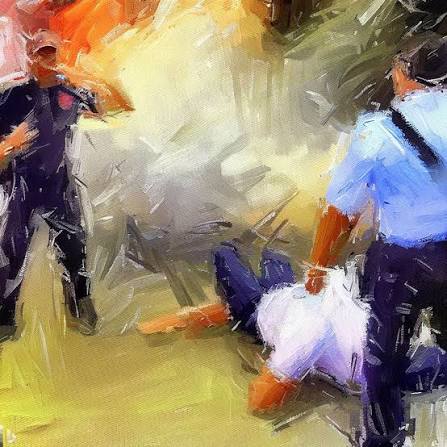
Structural determinants of police responses to psychotic crises: a narrative review with implications for Brazil
DOI:
https://doi.org/10.25118/2763-9037.2026.v16.1630Keywords:
Psychotic Disorders, Mental Health Services, Police, Violence, Crisis Intervention, Risk Assessment.Abstract
Introduction: Police interventions involving individuals experiencing psychotic crises have raised increasing concern due to the risk of escalation and fatal outcomes. These events highlight structural gaps in the coordination between public security and mental health systems, particularly in contexts where police act as first responders to clinical emergencies. Objective: To synthesize evidence on police responses to psychotic crises, with emphasis on structural determinants, stigma, co-response models, and prevention strategies. Methods: This narrative review was prepared according to the SANRA (Scale for the Assessment of Narrative Review Articles) recommendations to improve methodological transparency and reporting. It was included studies published between 2005 and 2025, identified through searches in PubMed/MEDLINE, Scopus, Web of Science, PsycINFO, and SciELO, complemented by Google Scholar and institutional reports. Eligible publications addressed police interactions in psychotic crises and included empirical studies, reviews, and guidelines. A structured selection process was applied, and findings were analyzed using thematic synthesis. Results: A total of 25 publications were included. Four main themes emerged: (A) lack of police preparedness; (B) failures in risk management; (C) symptomatic aggression is not a crime; and (D) state responsibility and prevention strategies. Evidence indicates that inadequate training, absence of structured risk-assessment protocols, and stigmatizing perceptions contribute to escalation and inappropriate use of force. In contrast, co-response models, continuous training, and integration with community mental health services are associated with improved outcomes. Conclusion: Police-related deaths during psychotic crises are influenced by structural factors rather than isolated decisions. Strengthening integrated crisis-response systems, including collaboration between public security and healthcare services, may contribute to safer and more effective management of psychiatric emergencies.
Downloads
Metrics
References
1. Wasum FD, Siqueira DF de, Xavier M da S, Zubiaurre P de M, Oliveira MAF de, Sequeira CA da C. Avaliação de Quarta Geração: intervenções realizadas na atenção à crise em saúde mental. Saúde debate. 2024;48(142):e9252. https://doi.org/10.1590/2358-289820241429252P
2. Watson AC, Fulambarker AJ. The Crisis Intervention Team Model of Police Response to Mental Health Crises: A Primer for Mental Health Practitioners. Best Pract Ment Health. 2012;8(2):71. https://doi.org/10.70256/741919sjsqrr PMid:24039557 PMCid:PMC3769782
3. Compton MT, Bakeman R, Broussard B, Hankerson-Dyson D, Husbands L, Krishan S, Stewart-Hutto T, D'Orio BM, Oliva JR, Thompson NJ, Watson AC. The police-based crisis intervention team (CIT) model: I. Effects on officers' knowledge, attitudes, and skills. Psychiatr Serv. 2014;65(4):517-22. https://doi.org/10.1176/appi.ps.201300107 PMid:24382628 PMCid:PMC11420632
4. Compton MT, Bakeman R, Broussard B, Hankerson-Dyson D, Husbands L, Krishan S, Stewart-Hutto T, D'Orio BM, Oliva JR, Thompson NJ, Watson AC. The police-based crisis intervention team (CIT) model: II. Effects on level of force and resolution, referral, and arrest. Psychiatr Serv. 2014;65(4):523-9. https://doi.org/10.1176/appi.ps.201300108 PMid:24382643
5. Todd TL, Chauhan P, Pope LG, Watson A. Responding to crisis: the intersection of police officer attitudes, organizational climate, and mental health crises. BMC Public Health. 2025;25(1):3371. https://doi.org/10.1186/s12889-025-23832-8 PMid:41057831 PMCid:PMC12502404
6. Todd TL. Breaking Down Bias: A Comparative Analysis of General Public and Police Officer Attitudes toward Mental Illness and Officer Decision-making in Mental Health Crises [thesis]. New York: The City University of New York; 2023. https://academicworks.cuny.edu/gc_etds/5901/
7. Lavoie JAA, Álvarez N, Martin K, Girard M, Coleman TG. A trans-disciplinary approach to assessing police responses to mental heath crisis: development of the de-escalating persons in crisis competencies tool (DePICT). Front Psychol. 2025;16:1586502. https://doi.org/10.3389/fpsyg.2025.1586502 PMid:41000515 PMCid:PMC12459345
8. Compton MT, Krishan S, Broussard B, Bakeman R, Fleischmann MH, Hankerson-Dyson D, Husbands L, Stewart T, D'Orio B, Watson AC. Modeling the effects of Crisis Intervention Team (CIT) training for police officers: How knowledge, attitudes, and self-efficacy drive de-escalation skills and referral decisions. Int J Law Psychiatry. 2022;83:101814. https://doi.org/10.1016/j.ijlp.2022.101814 PMid:35759936
9. Borum R, Scalora M, Otto R, Schneider K, Kennedy K, VanBerschot J, Mix E, Jaros S. Structured Professional Judgment (SPJ) tools: A reference guide for Counter-Insider Threat (C-InT) hubs [Internet]. Defense Personnel and Security Research Center; 2022. Available from: https://www.cdse.edu/Portals/124/Documents/jobaids/insider/SPJ-Reference-Guide.pdf
10. Charette Y, Crocker AG, Billette I. Police encounters involving citizens with mental illness: use of resources and outcomes. Psychiatr Serv. 2014;65(4):511-6. https://doi.org/10.1176/appi.ps.201300053 PMid:24337400
11. Muñoz JE, Lavoie JA, Pope AT. Psychophysiological insights and user perspectives: enhancing police de-escalation skills through full-body VR training. Front Psychol. 2024;15:1390677. https://doi.org/10.3389/fpsyg.2024.1390677 PMid:39295763 PMCid:PMC11409899
12. Fisher OJ, Donahoo C, Bosley E, du Cloux R, Garner S, Powell S, Pickard J, Grevis-James N, Wyder M. Barriers and enablers to implementing police mental health co-responder programs: A qualitative study using the consolidated framework for implementation research. Implement Res Pract.2024;5:26334895231220259. https://doi.org/10.1177/26334895231220259 PMid:38322801 PMCid:PMC10775732
13. Eggins E, Hine L, Mazerolle L, McEwan J, Hassall G, Roetman S, Roetman S, Bevis K. Mental health co-response models: rapid review of Evalution Literature [Internet]. Queensland: University of Queensland; 2020. Available from:https://gpd.uq.edu.au/wp-content/uploads/2024/02/Mental-Health-Co-Response-Models-2020.pdf?
14. Rafla-Yuan E, Chhabra DK, Mensah MO. Decoupling crisis response from policing - a step toward equitable psychiatric emergency services. N Engl J Med. 2021;384(18):1769-73. https://doi.org/10.1056/NEJMms2035710 PMid:33951369
15. Witt K, van Dorn R, Fazel S. Risk factors for violence in psychosis: systematic review and meta-regression analysis of 110 studies. PLoS One. 2013;8(2):e55942. https://doi.org/10.1371/journal.pone.0055942 PMID: 23418482 PMCID: PMC3572179
16. Mengual-Pujante M, Morán-Sánchez I, Luna-Ruiz Cabello A, Pérez-Cárceles MD. Attitudes of the police towards individuals with a known psychiatric diagnosis. BMC Psychiatry. 2022;22(1):614. https://doi.org/10.1186/s12888-022-04234-1 PMid:36123659 PMCid:PMC9484251
17. Compton MT, Esterberg ML, McGee R, Kotwicki RJ, Oliva JR. Brief reports: crisis intervention team training: changes in knowledge, attitudes, and stigma related to schizophrenia. Psychiatr Serv. 2006;57(8):1199-202. https://doi.org/10.1176/ps.2006.57.8.1199 PMid:16870973
18. Balcioglu YH, Kirlioglu Balcioglu SS, Oncu F, Turkcan A. Profiling Homicides Based on Impulsive or Proactive Natures in Male Schizophrenia Patients. J Am Acad Psychiatry Law. 2023;51(2):215-26. https://doi.org/10.29158/JAAPL.220064-22 PMID: 36931715.
19. Gao L, Yang R, Fan HZ, Wang LL, Zhao YL, Tan SP, Xiao CL, Zhou SJ. Correlation Between Aggressive Behavior and Impulsive and Aggressive Personality Traits in Stable Patients with Schizophrenia. Neuropsychiatr Dis Treat. 2023;19:801-09. https://doi.org/10.2147/NDT.S404176 PMid:37077708 PMCid:PMC10106313
20. Lu J, Gou N, Sun Q, Huang Y, Guo H, Han D, Zhou J, Wang X. Brain structural alterations associated with impulsiveness in male violent patients with schizophrenia. BMC Psychiatry. 2024;24:281. https://doi.org/10.1186/s12888-024-05721-3 PMid:38622613 PMCid:PMC11017613
21. Shapiro GK, Cusi A, Kirst M, O'Campo P, Nakhost A, Stergiopoulos V. Co-responding Police-Mental Health Programs: A Review. Adm Policy Ment Health. 2015;42(5):606-20. https://doi.org/10.1007/s10488-014-0594-9 PMid:25239523
22. Teti MJ, Clare Strange C, Hyatt JM, Kane RJ. PROTOCOL: Co-Responding Police-Mental Health Programs and the Impact on Justice and Social Service Outcomes: A Systematic Review. Campbell Syst Rev. 2025;21(3):e70051. https://doi.org/10.1002/cl2.70051 PMid:40630978 PMCid:PMC12230866
23. Bailey K, Lowder EM, Grommon E, Rising S, Bradley R. Ray. Evaluation of a Police-Mental Health Co-response Team Relative to Traditional Police Response in Indianapolis.Psychiatric Services. 2022;73:4. https://doi.org/10.1176/appi.ps.202000864 PMid:34433289
24. Amaral CEM, Treichel CA dos S, Francisco PMSB, Onocko-Campos RT. Assistência à saúde mental no Brasil: estudo multifacetado em quatro grandes cidades. Cad Saúde Pública. 2021;37(3):e00043420. https://doi.org/10.1590/0102-311X00043420 PMid:33950074
25. Department of Health and Social Care. Evaluating the implementation of Right Care, Right Person [Internet]. Londres: GOV.UK; 2024. Available from: https://www.gov.uk/government/publications/evaluating-the-implementation-of-right-care-right-person
Published
How to Cite
Issue
Section
License
Copyright (c) 2026 César Augusto Trinta Weber, Antônio Geraldo da Silva

This work is licensed under a Creative Commons Attribution-NonCommercial 4.0 International License.
Debates em Psiquiatria allows the author (s) to keep their copyrights unrestricted. Allows the author (s) to retain their publication rights without restriction. Authors should ensure that the article is an original work without fabrication, fraud or plagiarism; does not infringe any copyright or right of ownership of any third party. Authors should also ensure that each one complies with the authorship requirements as recommended by the ICMJE and understand that if the article or part of it is flawed or fraudulent, each author shares responsibility.
Attribution-NonCommercial 4.0 International (CC BY-NC 4.0) - Debates em Psiquiatria is governed by the licencse CC-By-NC
You are free to:
- Share — copy and redistribute the material in any medium or format
- Adapt — remix, transform, and build upon the material
The licensor cannot revoke these freedoms as long as you follow the license terms. Under the following terms:
- Attribution — You must give appropriate credit, provide a link to the license, and indicate if changes were made. You may do so in any reasonable manner, but not in any way that suggests the licensor endorses you or your use.
- NonCommercial — You may not use the material for commercial purposes.
No additional restrictions — You may not apply legal terms or technological measures that legally restrict others from doing anything the license permits.