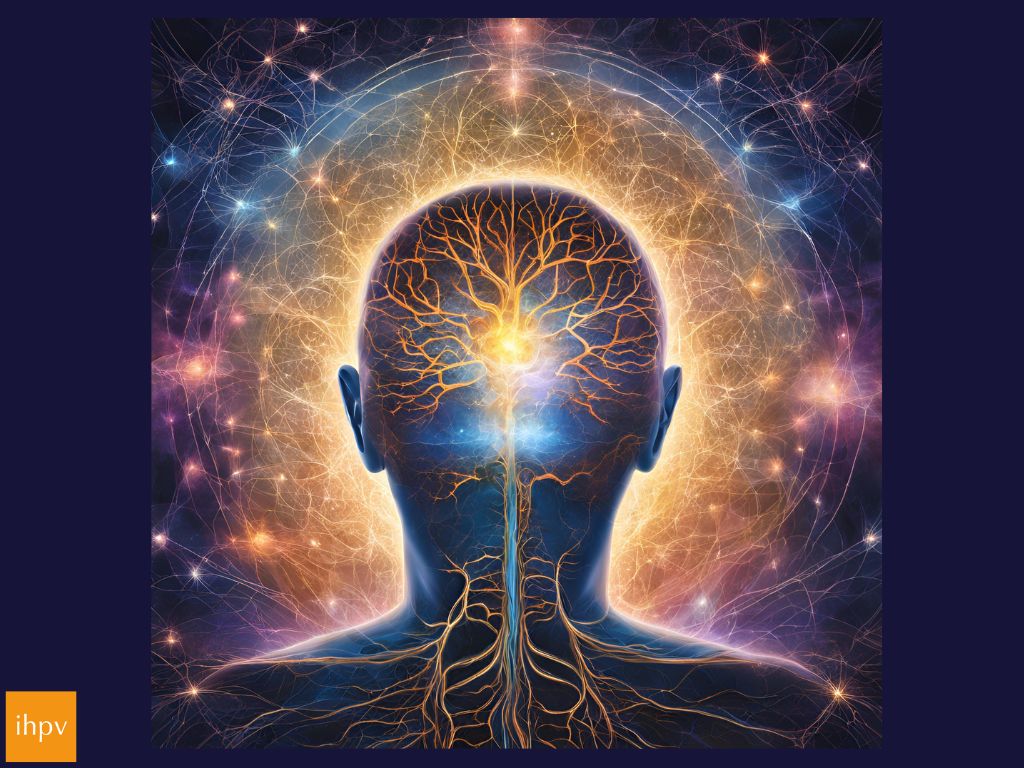
Anomalous experiences and psychotic disorders: between diagnosis and culture
DOI:
https://doi.org/10.25118/2763-9037.2026.v16.1564Keywords:
mental health, mental disorder, mental disorders, psychotic disorders, differential disorders, spirituality, culture, culture and mental healthAbstract
Introduction: Anomalous experiences (AEs) refer to unusual subjective phenomena that are often confused with psychotic manifestations. However, when they do not involve significant distress or functional impairment, they may not be associated with pathological conditions. Objective: This study aims to analyze the criteria that differentiate AEs from psychotic disorders, considering clinical, subjective, and cultural aspects. Method: This is a narrative literature review, conducted according to the recommendations of SANRA conducted using PubMed/MEDLINE and SciELO databases, with complementary searches in Google Scholar, including studies published primarily between 2019 and 2024, selected based on clinical and theoretical relevance. Data were organized into thematic axes: clinical, subjective, cultural, neurobiological aspects, and assessment instruments. Discussion: Findings suggest that differential diagnosis involves, among other factors, preserved insight, absence of significant functional impairment, self-limited nature of the experiences, and compatibility with cultural context. Conversely, features such as persistence, thought disorganization, functional impairment, and presence of psychiatric comorbidities are associated with a higher likelihood of psychopathology. Neuroimaging studies indicate distinct patterns between non-clinical individuals with AEs and patients with psychotic disorders, while instruments such as the Community Assessment of Psychic Experiences (CAPE) and the Cardiff Anomalous Perceptions Scale (CAPS) may assist in assessment and screening. Conclusion: Altogether, these findings suggest that understanding AEs benefits from a multidimensional and culturally sensitive approach, with the potential to reduce both unnecessary medicalization and underdiagnosis of psychotic disorders, contributing to a more precise and humanized clinical practice.
Downloads
Metrics
References
1. Heriot-Maitland C, Vitoratou S, Peters E, Hermans K, Wykes T, Brett C. Detecting anomalous experiences in the community: the Transpersonal Experiences Questionnaire (TEQ). Psychol Psychother. 2023;96(2):383-98. https://doi.org/10.1111/papt.12445 PMid:36621803 PMCid:PMC10952405
2. Furlanetto D. Vozes do além: uma análise psicopatológica da eclosão de experiências anômalas em médiuns espíritas. Rev latinoam psicopatol fundam. 2022;25(1):20-42. https://doi.org/10.1590/1415-4714.2022v25n1p20.2
3. Pechey R, Halligan P. Prevalence and correlates of anomalous experiences in a large non-clinical sample. Psychol Psychother. 2012;85(2):150-62. https://doi.org/10.1111/j.2044-8341.2011.02024.x PMid:22903907
4. Reichow JRC. Estudo de experiências anômalas em médiuns e não médiuns: prevalência, relevância, diagnóstico diferencial de transtornos mentais e relação com qualidade de vida [tese na internet]. São Paulo: Universidade de São Paulo; 2017. Disponível em: https://www.teses.usp.br/teses/disponiveis/47/47134/tde-18012018-163219/publico/reichow_do.pdf
5. Maraldi EO, Machado FM, Zangari W. Experiências anômalas e dissociativas em contexto religioso: uma abordagem autoetnográfica. Rev Abordagem Gestáltica. 2020;26(2):147-61. https://doi.org/10.18065/2020v26n2.3
6. Thomas DA. A participatory research study to explore the healing potential of children's anomalous experiences. Explore (NY). 2022;18(5):551-58. https://doi.org/10.1016/j.explore.2021.08.012 PMid:34526234
7. Rabeyron T. When the truth is out there: counseling people who report anomalous experiences. Front Psychol. 2022;12:693707. https://doi.org/10.3389/fpsyg.2021.693707 PMid:35058829 PMCid:PMC8764292
8. American Psychiatric Association. Diagnostic and statistical manual of mental disorders: DSM-5. 5th ed. Arlington: American Psychiatric Publishing; 2014. https://doi.org/10.1176/appi.books.9780890425596
9. World Health Organization. International classification of diseases for mortality and morbidity statistics. 11th ed. Geneva: WHO; 2022.
10. Koenig HG. Religião, espiritualidade e transtornos psicóticos. Rev Psiquiatr Clín. 2007;34(Suppl 1):95-104. https://doi.org/10.1590/S0101-60832007000700013
11. Santos RAS. Experiências anômalas com ayahuasca e DMT: uma leitura psicossocial [tese na internet]. São Paulo: Instituto de Psicologia, Universidade de São Paulo; 2024. https://doi.org/10.11606/T.47.2024.tde-09082024-132425
12. Mainieri AG, Moreira-Almeida A. Experiências espirituais: alucinação e fenomenologia associadas a experiências espirituais em uma população não clínica: um estudo qualitativo. Estudos de Psicol (Campinas). 2025;42:e220012. https://doi.org/10.1590/1982-0275202542e220012
13. American Psychiatric Association. Diagnostic and statistical manual of mental disorders: DSM-5-TR. 5th ed. Washington (DC): American Psychiatric Publishing; 2022. https://doi.org/10.1176/appi.books.9780890425787
14. Melo JN, Pereira BA. Mindfulness e transtornos psicóticos: uma revisão de literatura. Periód Bras Pesqui Cient. 2024;3(2):2265-82. https://doi.org/10.36557/pbpc.v3i2.287
15. Desmeules C, Corbeil O, Huot-Lavoie M, Béchard L, Brodeur S, Demers MF, Roy M-A, Deslauriers J. Psychotic disorders and exosomes: an overview of current evidence and future directions. Psychiatry Res. 2024;339:116066 https://doi.org/10.1016/j.psychres.2024.116066 PMid:38996632
16. Barbosa TMS, Souza AJS, Amaral AS, Augusto AL, Silva MB, Santos CAF, Berwig D, Souza JSS, Amaral LS, Silveira RE, Santos ROS, Ramos SF. Impacto dos transtornos psicóticos na qualidade de vida dos pacientes e seus familiares. BJIHS. 2024;6(1):683-94. https://doi.org/10.36557/2674-8169.2024v6n1p683-694
17. Cambra Almerge J, Sánchez-Romero S, Arias Horcajadas F. Differences between substance-induced psychotic disorders and non-substance-induced psychotic disorders and diagnostic stability. Adicciones. 2023;35(2):95-106. https://doi.org/10.20882/adicciones.1291 PMid:36975062
18. Menezes AA Jr, Moreira-Almeida A. Differential diagnosis between spiritual experiences and mental disorders of religious content. Arch Clin Psychiatry. 2009;36(2):75-82. https://doi.org/10.1590/S0101-60832009000200006
19. Mohn-Haugen CR, Møller P, Mohn C, Larøi F, Teigset CM, Øie MG, Rund BR. Anomalous self-experiences and neurocognitive functioning in adolescents at risk for psychosis: still no significant associations found between these two vulnerability markers. Compr Psychiatry. 2023;125:152400. https://doi.org/10.1016/j.comppsych.2023.152400 PMid:37451231
20. Assaf R, Ouellet J, Bourque J, Stip E, Leyton M, Conrod P, Potvin S. A functional neuroimaging study of self-other processing alterations in atypical developmental trajectories of psychotic-like experiences. Sci Rep. 2022;12(1):16324. https://doi.org/10.1038/s41598-022-20129-3 PMid:36175570 PMCid:PMC9522794
21. Walther S, Lefebvre S, Conring F, Gangl N, Nadesalingam N, Alexaki D, Wüthrich F, Rüter M, Viher PV, Federspiel A, Wiest R, Stegmayer K. Limbic links to paranoia: increased resting-state functional connectivity between amygdala, hippocampus and orbitofrontal cortex in schizophrenia patients with paranoia. Eur Arch Psychiatry Clin Neurosci. 2022;272(6):1021-32. https://doi.org/10.1007/s00406-021-01337-w PMid:34636951 PMCid:PMC9388427
22. Underwood R, Mason L, O'Daly O, Dalton J, Simmons A, Barker GJ, Peters E, Kumari V. You read my mind: fMRI markers of threatening appraisals in people with persistent psychotic experiences. NPJ Schizophr. 2021;7(1):49. https://doi.org/10.1038/s41537-021-00173-0 PMid:34635671 PMCid:PMC8505497
23. Germann T, Brederoo S, Sommer IE. Abnormal synaptic pruning during adolescence underlying the development of psychotic disorders. Curr Opin Psychiatry. 2021;34(3):222-27. https://doi.org/10.1097/YCO.0000000000000696 PMid:33560023 PMCid:PMC8048735
24. Patel PK, Leathem LD, Currin DL, Karlsgodt KH. Adolescent neurodevelopment and vulnerability to psychosis. Biol Psychiatry. 2021;89(2):184-93. https://doi.org/10.1016/j.biopsych.2020.06.028 PMid:32896384 PMCid:PMC9397132
25. Acunzo DJ, Evrard R, Rabeyron T. Anomalous experiences, psi and functional neuroimaging. Front Hum Neurosci. 2013;7:893. https://doi.org/10.3389/fnhum.2013.00893 PMid:24427128 PMCid:PMC3870293
26. Sestito M, Raballo A, Stanghellini G, Gallese V. Editorial: Embodying the self: neurophysiological perspectives on the psychopathology of anomalous bodily experiences. Front Hum Neurosci. 2017;11:631. https://doi.org/10.3389/fnhum.2017.00631 PMid:29311881 PMCid:PMC5742196
27. Mossaheb N, Becker J, Schaefer MR, Klier CM, Schloegelhofer M, Papageorgiou K, Amminger GP. The Community Assessment of Psychic Experience (CAPE) questionnaire as a screening instrument in the detection of individuals at ultra-high risk for psychosis. Schizophr Res. 2012;141(2-3):210-4. https://doi.org/10.1016/j.schres.2012.08.008 PMid:22986044
28. Núñez D, Godoy MI, Gaete J, Faúndez MJ, Campos S, Fresno A, Spencer R. The Community Assessment of Psychic Experiences-Positive scale (CAPE-P15) accurately classifies and differentiates psychotic experience levels in adolescents from the general population. Plos One. 2021;16(8):e0256686. https://doi.org/10.1371/journal.pone.0256686 PMid:34437593 PMCid:PMC8389461
29. Bell V, Halligan PW, Ellis HD. The Cardiff Anomalous Perceptions Scale (CAPS): a new validated measure of anomalous perceptual experience. Schizophr Bull. 2006;32(2):366-77. https://doi.org/10.1093/schbul/sbj014 PMid:16237200 PMCid:PMC2632213
30. Almeida AM, Lotufo F Neto. Diretrizes metodológicas para investigar estados alterados de consciência e experiências anômalas. Arch. Clin. Psychiatry. 2003;30(1):21-8. https://doi.org/10.1590/S0101-60832003000100003
31. Barros MCM. Experiências espirituais e religiosas no Brasil: prevalência, características e implicações para a saúde mental [tese na internet]. São Paulo: Universidade de São Paulo; 2022. https://doi.org/10.11606/T.5.2022.tde-19042023-123148
32. Serra J, Maraldi E, Farias M, Oliveira L. Dissociative symptoms and personality variables among individuals reporting anomalous experiences: a longitudinal study. Rev Abordagem Gestáltica. 2022;28(2):190-99. https://revistaabordagemgestaltica.com.br/index.php/go/article/view/19
Published
How to Cite
Issue
Section
License
Copyright (c) 2026 Julia Lais Ressel, Khadija Hajar Costa, Pedro Marcelo Moro, Vlaudimir Dias Marques

This work is licensed under a Creative Commons Attribution-NonCommercial 4.0 International License.
Debates em Psiquiatria allows the author (s) to keep their copyrights unrestricted. Allows the author (s) to retain their publication rights without restriction. Authors should ensure that the article is an original work without fabrication, fraud or plagiarism; does not infringe any copyright or right of ownership of any third party. Authors should also ensure that each one complies with the authorship requirements as recommended by the ICMJE and understand that if the article or part of it is flawed or fraudulent, each author shares responsibility.
Attribution-NonCommercial 4.0 International (CC BY-NC 4.0) - Debates em Psiquiatria is governed by the licencse CC-By-NC
You are free to:
- Share — copy and redistribute the material in any medium or format
- Adapt — remix, transform, and build upon the material
The licensor cannot revoke these freedoms as long as you follow the license terms. Under the following terms:
- Attribution — You must give appropriate credit, provide a link to the license, and indicate if changes were made. You may do so in any reasonable manner, but not in any way that suggests the licensor endorses you or your use.
- NonCommercial — You may not use the material for commercial purposes.
No additional restrictions — You may not apply legal terms or technological measures that legally restrict others from doing anything the license permits.